
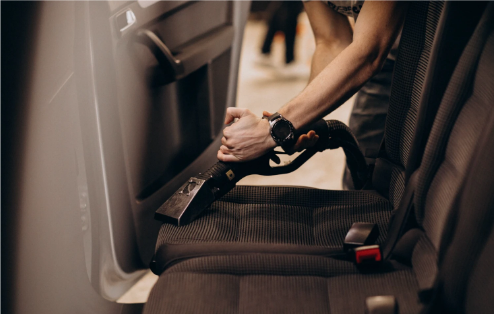
Choosing where to take your car for car detailing Dubai is not as straightforward as it looks. The market is saturated, dozens of studios compete for the same searches, prices vary widely for what appears to be the same service, and the difference between a competent job and a damaging one is not always visible until weeks later. This guide covers what actually separates a professional studio from the rest.
Table of Contents
- 1 Experience with the Local Climate
- 2 In-House Work vs Outsourcing
- 3 Training and Certification
- 4 Materials and Supplier Relationships
- 5 What a Serious Studio Offers
- 6 Transparency on Pricing and Timeline
- 7 Warranty and Aftercare
- 8 Why Supercar Owners Choose Specialists
- 9 Checklist Before You Book
- 10 FAQ
- 11 Bottom Line
Experience with the Local Climate
Dubai’s environment is genuinely hostile to cars. Temperatures above 45°C in summer, UV radiation that degrades paint and interior materials faster than in most markets, fine sand that acts as an abrasive on unprotected surfaces, and humidity cycles that stress adhesives and coatings. A studio that understands how these conditions interact with different materials, PPF films, ceramic coatings, window tints, will make different recommendations than one that simply applies whatever the client requests.
The question to ask: how long have they been working specifically in the UAE, and do they adjust their process for the climate?
In-House Work vs Outsourcing
Some studios take your car, handle the consultation, and then send the actual work to a third party. This is more common than it should be. The consequence is reduced accountability: if something goes wrong, responsibility is diffuse, and the quality of the third-party work is beyond the studio’s control.
A professional studio performs all work on-site with its own team. Desert Diamond Detailing in Al Quoz operates entirely in-house, every service from PPF installation to upholstery to ceramic coating is handled by their own specialists on the premises. No middlemen, no subcontracting.
Training and Certification
The detailing industry has no universal licensing requirement in the UAE, which means the gap between trained and untrained technicians is entirely down to the studio’s own standards. European-trained specialists bring a different approach to surface preparation, paint correction, and film installation than those with no formal training.
What to look for: ask where the team trained, whether they have manufacturer certifications for the products they use, and whether they can show completed work on cars similar to yours.
Materials and Supplier Relationships
The outcome of a detailing job depends as much on the materials used as on the technician’s skill. PPF from an unverified supplier behaves differently from 3M, XPEL, or SunTek. Ceramic coatings vary enormously in durability and UV resistance. Window tint that looks identical on day one can yellow and delaminate within a year if it is not a quality product.
Professional studios work exclusively with certified materials from official suppliers and can provide documentation. Desert Diamond uses only original films, coatings, and tints from verified sources and backs PPF installations with a manufacturer warranty of up to 12 years, confirmed in writing before work begins.
What a Serious Studio Offers
| Service | What to check |
| Paint Protection Film (PPF) | Film brand, warranty terms, installation method |
| Ceramic coating | Product brand, cure time, maintenance requirements |
| Window tinting | Film brand, heat rejection percentage, UAE compliance |
| Car polishing | Single or multi-stage, paint thickness measurement |
| Interior detailing | Products used, drying time, leather treatment |
| Car wrapping | Film brand, surface preparation process |
Transparency on Pricing and Timeline
A professional studio gives you a written quote before work begins, not a verbal estimate that changes at collection. The timeline should be realistic — a full PPF installation on a large SUV takes 2 to 3 days done properly. Studios that promise same-day results on complex jobs are usually cutting corners on surface preparation, which is where most of the work is.
Warranty and Aftercare
Any studio confident in its work offers a warranty. For PPF this should be manufacturer-backed, not just a verbal commitment. For ceramic coatings, the warranty should specify what it covers and under what conditions. If a studio cannot produce warranty documentation before you leave the car, that is a significant red flag.
Why Supercar Owners Choose Specialists
Dubai has a higher concentration of exotic and luxury cars per capita than almost any city in the world. Studios that work with Lamborghinis, Ferraris, and Rolls-Royces regularly have a different level of precision on body-panel preparation and film cutting than those that primarily handle mass-market vehicles. The tolerances on a Mansory G63 body kit are not the same as on a Toyota Camry.
Desert Diamond is regularly trusted by other detailing companies in Dubai to handle their most complex client cars, which is perhaps the most credible endorsement a studio can have.
Checklist Before You Book
- Do they perform all work in-house?
- How long have they operated in Dubai specifically?
- What film and coating brands do they use, and are they from official suppliers?
- Can they provide a written warranty before work begins?
- Do they have experience with your specific car type?
- Is the quote itemised and fixed before the car enters the studio?
FAQ
How often should I get my car detailed in Dubai? For a car without PPF or ceramic coating, every 3 to 4 months is reasonable given the dust and UV exposure. For a protected car, the intervals can extend to 6 months for maintenance details.
Is PPF worth it in Dubai specifically? Yes, more so than in most markets. The combination of sand abrasion, UV intensity, and heat makes paint significantly more vulnerable than in temperate climates. PPF with a UV-blocking topcoat addresses all three simultaneously.
How do I know if a tinting film is legal in Dubai? RTA regulations allow visible light transmission of no less than 30% for front side windows and 50% for the windshield. A professional studio will only install compliant films and can provide documentation confirming the VLT percentage.
Bottom Line
The difference between a professional car detailing studio and an average one in Dubai comes down to four things: trained technicians, certified materials, in-house execution, and documented warranties. Price alone is not a reliable guide — some of the most expensive studios in the city outsource their work, and some of the most technically capable charge competitive rates.
If you are leaving a luxury or exotic car with a studio, those four criteria are non-negotiable. The climate and road conditions in Dubai are unforgiving enough that a poor detailing job does not stay hidden for long.