
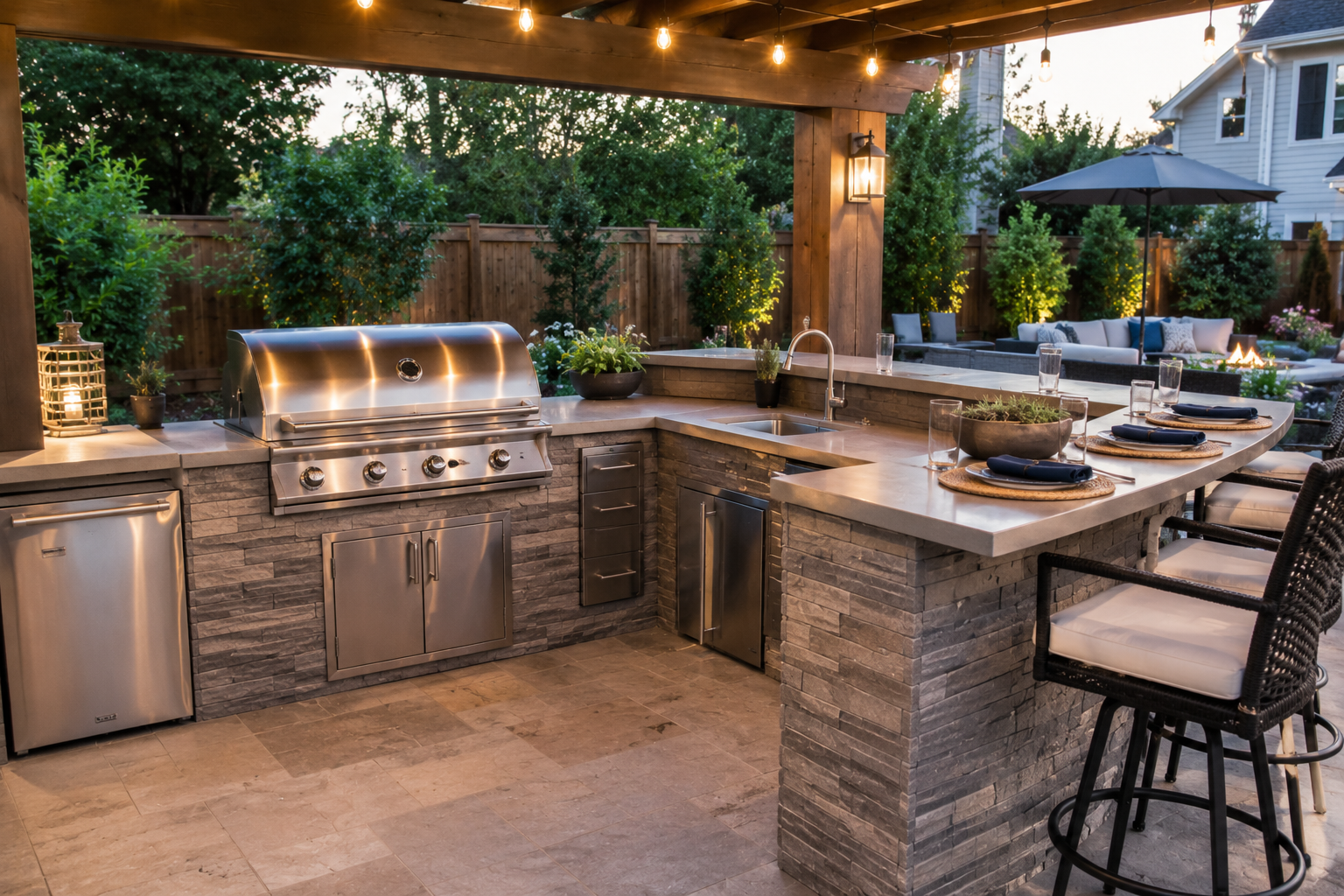
A well-designed outdoor kitchen can transform a backyard into a functional space for cooking, entertaining, and spending time with family and friends. Beyond selecting appliances, successful outdoor kitchen design involves thoughtful planning for layout, workflow, storage, utilities, and weather resistance. By balancing functionality with aesthetics, homeowners can create an outdoor living area that is both practical and enjoyable year-round.
Working with an experienced outdoor kitchen company can help homeowners evaluate design options, choose durable materials, and develop a layout that complements their available space and lifestyle. Careful planning, quality craftsmanship, and attention to long-term maintenance contribute to an outdoor kitchen that enhances convenience, comfort, and the property’s overall value.
Table of Contents
Assess Your Needs and Space
The first step in designing a functional outdoor kitchen is to evaluate how you plan to use the space. Consider the number of people you typically entertain, your preferred cooking styles, and your available square footage. Do you envision weekend barbecues with friends or tranquil dinners with your family? Purpose-driven planning will shape every subsequent choice, from appliance selection to layout. Even a small patio can be transformed with strategic design to include functional cooking and gathering areas.
Plan the Layout
The layout of your outdoor kitchen directly influences both aesthetics and usability. Some common configurations to consider:
- Linear (Straight Run): Perfect for narrow spaces, with appliances and countertops aligned in a single row.
- L-Shaped: Makes the most of corner spaces and provides distinct zones for prep, cooking, and serving. Best suited for medium-sized areas.
- U-Shaped: Offers ample counter space and an efficient workflow for larger outdoor kitchens.
Following the “work triangle” concept. where the grill, refrigerator, and sink are within close proximity, ensures a smoother cooking experience. Make sure there is adequate circulation space for both the cook and the guests.
Select Durable Materials
Outdoor kitchens are exposed to a range of weather conditions, so selecting resilient materials is essential. Stainless steel appliances are a popular choice due to their resistance to rust and corrosion. Countertops made from granite, porcelain, or concrete provide a durable, visually appealing workspace. Ensure cabinets, flooring, and fixtures are specifically engineered for outdoor use to avoid premature wear.
Choose Appropriate Appliances
Your selection of appliances should reflect your preferred cooking methods and entertaining habits. Standard features often include:
- Grill: The main attraction in most outdoor kitchens
- Side Burner: Handy for preparing sauces or side dishes
- Refrigerator: Convenient for keeping ingredients and drinks cold
- Sink: Essential for quick cleanup and food prep
Additions such as pizza ovens, smokers, or beverage centers can further enhance your setup if they fit your culinary interests.
Incorporate Functional Zones
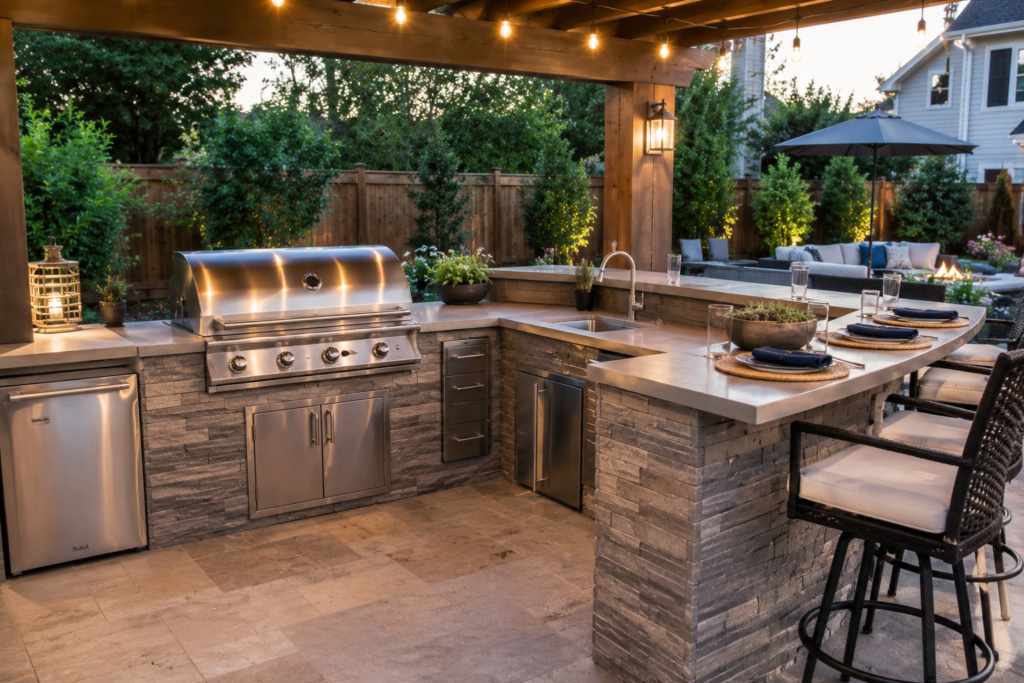
Dividing the kitchen into specialized zones increases efficiency and user enjoyment. Typical zones include:
- Hot Zone: Grills and burners
- Cold Zone: Refrigeration and ice makers
- Wet Zone: Sinks and dishwashers
- Dry Zone: Prep space, warming drawers, and storage
Effective zoning helps to declutter the workspace and ensures that everything you need is always within reach.
Ensure Proper Utilities
Your outdoor kitchen will require utilities, including gas, water, and electricity. Partnering with licensed professionals guarantees that installations are safe and up to code. Incorporate outlets for small appliances, and consider under-counter plumbing for sinks or ice makers. Utility planning is foundational to both convenience and safety, especially for features such as lighting and refrigeration.
Add Comfort and Ambiance
Enhance the comfort and appeal of your outdoor kitchen area by providing ample seating and effective lighting. Weather-resistant chairs and benches offer relaxation, while a mix of ambient and task lighting keeps your space inviting and functional after sunset. Consider installing heating elements, such as patio heaters or a fire pit, to extend your kitchen’s usability into the cooler months.
For more ideas on expanding your outdoor living area, explore expert advice at Architectural Digest. Thoughtfully planned comfort features can encourage more frequent outdoor gatherings while creating a year-round welcoming space for dining, entertaining, and relaxing.
Consider Weather Protection
Shielding your outdoor kitchen from the elements is vital for longevity and comfort. Install features such as pergolas, awnings, or retractable canopies to provide shade and protect appliances from rain. In windier areas or spaces prone to insects, enclosures such as screens or glass walls allow year-round enjoyment and hassle-free entertaining. These additions safeguard your investment, making the space more comfortable and durable for years to come.
Creating an Outdoor Kitchen That Lasts
A functional outdoor kitchen combines thoughtful planning, durable materials, efficient layouts, and comfortable gathering spaces. By designing with your lifestyle, climate, and long-term needs in mind, you can create an inviting outdoor area that enhances everyday living, supports memorable entertaining, and adds lasting value to your home.