
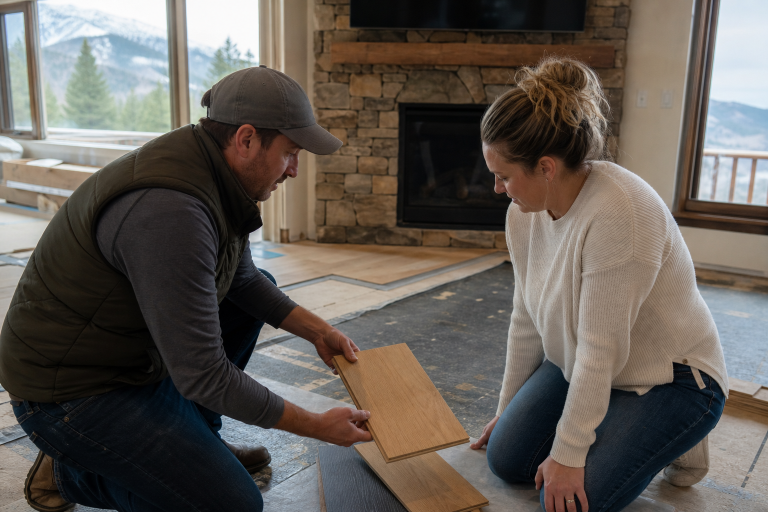
Choosing engineered hardwood for a Colorado home is about more than finding the right color. SOEN Hardwood Denver is the Denver-based Soen Hardwood resource for engineered hardwood products, distribution, installation, refinishing, remodeling, and custom stair work. With more than two decades of Colorado flooring experience, the company works with homeowners, builders, architects, and designers who need floors suited to the region’s dry climate, sunlight, and seasonal changes.
From Denver-area remodels to projects across Colorado, the best result starts with matching the product to the home’s subfloor, lighting, lifestyle, and indoor environment. A beautiful floor should also have a realistic maintenance plan and suitable repair options for years ahead.
Table of Contents
- 1 Why Colorado Creates Special Flooring Conditions
- 2 Engineered Hardwood and Solid Hardwood: What Is the Difference?
- 3 Five Product Details Worth Comparing
- 4 Prepare the Home Before Installation
- 5 Installation Choices for Colorado Homes
- 6 Care Tips for Dry Winters and Active Households
- 7 Common Problems and What They May Mean
- 8 Questions to Ask Before Buying
- 9 Frequently Asked Questions
- 10 Final Buying Checklist
Why Colorado Creates Special Flooring Conditions
Wood is hygroscopic, meaning it absorbs and releases moisture in response to the surrounding air. Colorado’s heated winter interiors can become especially dry, while summer weather, air conditioning, open windows, and rapid temperature changes can alter indoor humidity. As wood loses moisture, boards may shrink slightly. In a dry season, small gaps can appear between planks, then tighten when humidity rises. The Oregon State University guide to wood moisture relationships offers useful background on equilibrium moisture content and why wood movement is normal.
Engineered Hardwood and Solid Hardwood: What Is the Difference?
Solid hardwood is made from one piece of wood. It has a long refinishing history, but it can move more noticeably as conditions change. Engineered hardwood has a real hardwood surface over multiple layers of wood-based material. A well-balanced, layered construction can reduce movement across the width of the plank, making it a practical choice for many Colorado homes.
Neither option is automatically best. Solid flooring may suit certain wood-subfloor projects, while engineered flooring can provide more installation flexibility over concrete, radiant-heat systems, and some below-grade spaces. Always follow the exact product instructions.
Five Product Details Worth Comparing
1. Core Construction
The core influences stability, strength, and long-term performance. Look for balanced, multi-layer construction with dependable bonding. Ask how the layers are arranged and whether the bottom layer helps counter movement from the top veneer.
2. Wear Layer Thickness
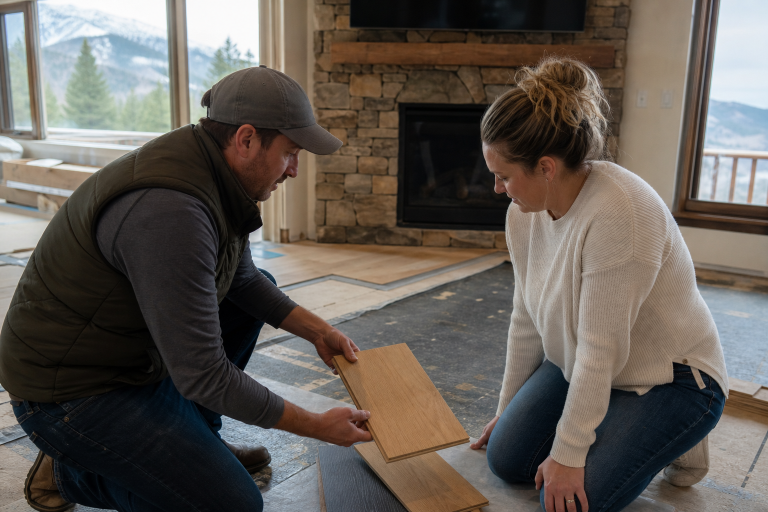
The wear layer is the real wood surface. A thicker wear layer can provide more flexibility for future repairs or refinishing, but not every engineered floor can be sanded the same way. Confirm the manufacturer’s refinishing guidance before assuming a floor can be renewed.
3. Plank Width and Length
Wide, long boards create a clean and modern appearance with fewer visual breaks. They also make subfloor flatness, layout planning, and installation accuracy more important. Inconsistent subfloors can be easier to notice beneath wider planks.
4. Surface Finish
Matte lacquer, satin, oil-style, and UV-cured finishes all offer different looks and care requirements. Low-sheen finishes often make dust, small scratches, and everyday wear less obvious. Choose based on pets, children, traffic levels, and how much routine maintenance fits your household.
5. Wood Species and Grade
Oak is versatile and popular, maple is often cleaner in grain, hickory can provide bold variation, and walnut brings deeper color. Grade matters too. A rustic grade highlights knots and natural character, while a select grade creates a more uniform presentation.
Prepare the Home Before Installation
- Confirm the structure is dry and free of active leaks.
- Test the subfloor for moisture, strength, and flatness.
- Measure indoor temperature and relative humidity.
- Acclimate materials exactly as the manufacturer requires.
- Keep heating or cooling systems operating before, during, and after installation.
- Plan transitions, vents, stairs, doorways, tile, and carpet early.
For context, a Building America wood moisture content resource identifies roughly 6% to 9% equilibrium moisture content as a useful range for new flooring under conditions near 70°F and 30% to 50% relative humidity. This is not a universal installation rule. Product instructions and professional moisture testing should control the final plan.
Installation Choices for Colorado Homes
Nail-down installation is commonly used over compatible wood subfloors and provides a traditional, firmly attached result. Glue-down installation can work well in certain remodels and concrete applications, but it requires compatible adhesive systems and careful moisture testing. Floating installation may simplify some projects, yet it still needs a clean, flat, properly prepared subfloor.
Plan stairs at the same time as the floor. Confirm stair noses, landing boards, risers, transitions, and color matching before ordering materials. Treating stairs as an afterthought can create avoidable delays and mismatched details.
Care Tips for Dry Winters and Active Households
- Use a hygrometer to monitor indoor relative humidity.
- Discuss humidification or dehumidification needs with an HVAC professional.
- Wipe spills promptly and avoid soaking wet mops.
- Use entry mats to capture grit, sand, and melting snow.
- Add felt pads beneath furniture and lift heavy items when moving them.
- Use shades or window treatments where strong sunlight may fade wood.
Common Problems and What They May Mean
Small Seasonal Gaps
Minor winter gaps can be a normal response to dry air. Large, sudden, spreading, or permanent gaps deserve professional review.
Cupping, Crowning, and Scratches
Cupping means the plank edges rise, while crowning means the plank center rises. Both can point to moisture imbalance, leaks, or subfloor issues. Scratches commonly come from grit, pet nails, and furniture movement, so prevention is usually more effective than repair.
Fading and Color Change
Natural wood changes with light exposure. Ask how a selected species and finish may age, especially in rooms with large south- or west-facing windows.
Questions to Ask Before Buying
- What core construction and wear-layer thickness does the floor have?
- What humidity range and acclimation process does the manufacturer require?
- Can the product be refinished, and what installation method suits the subfloor?
- What warranty limits apply to moisture, pets, scratches, and sunlight?
- Are matching stair parts, vents, thresholds, and transitions available?
- Who is responsible for moisture testing and subfloor preparation?
Frequently Asked Questions
Is engineered hardwood a good choice for Colorado?
It can be an excellent option when the product is well constructed, and the home’s subfloor, acclimation process, and indoor climate are properly managed.
Can engineered hardwood be installed over concrete?
Some engineered products are designed for concrete, but moisture testing, adhesive selection, and manufacturer instructions are essential.
Is matte flooring easier to live with?
Matte finishes can make small marks less noticeable, but every hardwood floor still benefits from regular cleaning and protection.
Final Buying Checklist
- Choose a species and grade that fit the desired style.
- Compare core construction, wear layer, finish, and plank size.
- Confirm humidity, acclimation, warranty, and cleaning requirements.
- Test the subfloor before selecting an installation method.
- View samples in natural and artificial light.
- Plan stairs, vents, transitions, and adjacent flooring before installation begins.
In Colorado, the right engineered hardwood floor is one that suits the home as well as the design. Careful product selection, moisture management, professional preparation, and realistic everyday care can help create a floor that performs beautifully through dry winters, sunny days, and changing seasons.