
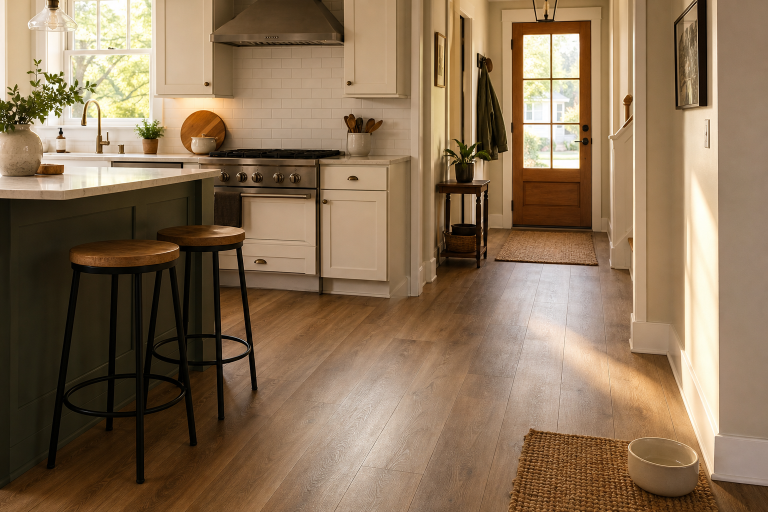
Luxury vinyl flooring can be a practical choice for Raleigh homes because it comes in wood-look and stone-look styles, handles everyday messes well, and offers several installation formats. The best result, however, comes from matching the product to the room rather than choosing solely by color or price.
For a local planning reference, Artisan Flooring of NC’s luxury vinyl plank flooring page explains LVP types, subfloor preparation, installation approaches, and final inspections. Artisan Flooring of NC is a licensed and insured Raleigh-area flooring provider serving communities including Cary, Durham, Apex, and Chapel Hill, so its project-focused information is useful for homeowners comparing flooring choices against local home conditions.
Table of Contents
- 1 Why Room-By-Room Planning Makes Sense
- 2 Start With The Room’s Daily Demands
- 3 Best Features For Kitchens And Entryways
- 4 Choosing Flooring For Bathrooms And Laundry Rooms
- 5 Comfort And Style In Living Rooms And Bedrooms
- 6 High-Traffic Hallways And Family Areas
- 7 Pick The Right Installation Method
- 8 Why Subfloor Preparation Matters
- 9 Color, Plank Size, And Layout Choices
- 10 Questions To Ask Before Ordering
- 11 A Simple Decision Guide
- 12 Conclusion
Why Room-By-Room Planning Makes Sense
A kitchen, bathroom, bedroom, hallway, and basement do not put the same demands on a floor. Kitchens deal with dropped food and standing time. Bathrooms and laundry rooms face moisture. Hallways collect grit from shoes, while bedrooms benefit from a quieter, more comfortable surface. Pets, children, sunlight, furniture weight, and the condition of the existing floor should all shape the decision.
Luxury vinyl is not automatically the right answer for every space. Some homeowners may prefer real hardwood for its natural character, ceramic tile for a wet bathroom, or carpet for a particularly soft bedroom. The goal is to choose a material that fits the household’s priorities and maintenance expectations.
Start With The Room’s Daily Demands
Before looking at samples, use a simple checklist to narrow the choices:
- How much foot traffic will the room receive?
- Will spills, humidity, or dampness be common?
- Do pets or children regularly use the space?
- Does strong direct sunlight reach the floor?
- Is comfort underfoot important?
- Will heavy appliances, cabinets, or furniture remain in place?
Best Features For Kitchens And Entryways
Kitchens and entryways generally need a durable, easy-care surface. Look for a product with a wear layer appropriate for the expected traffic, stain resistance, and a lightly textured finish that helps disguise small amounts of dust and everyday scuffs. Textured wood visuals can also offer more visual depth than a very smooth, glossy plank.
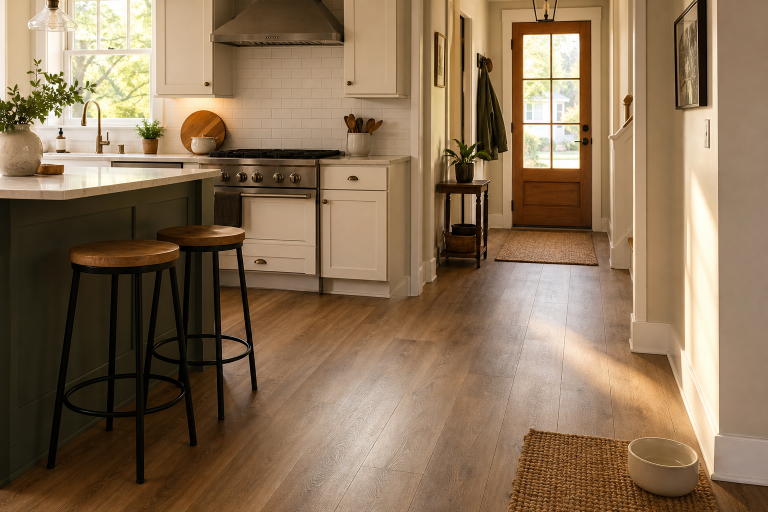
Read waterproof and water-resistant claims closely. Performance can depend on seams, perimeter gaps, transitions, and installation quality. Check the warranty for room-specific exclusions, follow the approved cleaning instructions, and place mats near exterior doors to keep grit from acting like sandpaper.
Choosing Flooring For Bathrooms And Laundry Rooms
Bathrooms and laundry rooms require special attention to details that can be overlooked in a dry living space. Tight seams, properly finished transitions, a dry and level subfloor, and careful cuts around toilets, cabinets, and floor drains all matter. A floating floor also needs the expansion space specified by its manufacturer.
Water-resistant flooring does not fix plumbing leaks, poor ventilation, or a chronically damp subfloor. Address those conditions first. If water reaches the edges or beneath the floor repeatedly, even a well-chosen vinyl product may eventually experience problems.
Comfort And Style In Living Rooms And Bedrooms
Living rooms and bedrooms are often where visual flow and underfoot comfort matter most. Wider planks, matte finishes, subtle grain patterns, and soft oak, natural maple, or warm neutral tones can create a relaxed appearance without making the room feel busy.
Core construction is worth comparing. SPC tends to be firmer, denser, and more resistant to dents, which can help in active areas or beneath heavier furnishings. WPC usually has a slightly softer, quieter feel that can appeal in bedrooms and living rooms. These differences between rigid SPC and softer WPC cores are tradeoffs, not a universal ranking of one product over another.
High-Traffic Hallways And Family Areas
Hallways, mudroom paths, and family rooms benefit from resilient surfaces that hold up to repeated use. Choose a wear layer suited to your household, use furniture pads under legs, and never drag heavy furniture across the floor. Patterns with moderate variation often hide small amounts of dust between cleanings better than extremely light or nearly solid colors.
Pick The Right Installation Method
Click-Lock
Click-lock planks connect at their edges and float over the prepared subfloor. This option can be convenient for renovations, but it still requires a clean, flat surface and correct expansion gaps.
Glue-Down
Glue-down flooring bonds directly to the subfloor. It can work well in busy areas and where floor-height transitions matter, but adhesive selection and surface preparation are especially important.
Loose-Lay
Loose-lay products use a high-friction backing and product weight to limit movement. They may be useful for certain spaces, but the room dimensions, substrate, and manufacturer’s instructions determine whether they are appropriate.
Why Subfloor Preparation Matters
Luxury vinyl can reveal what lies beneath it. Dips, bumps, cracks, loose debris, and moisture concerns may lead to visible imperfections, movement, or premature wear. Preparation should include cleaning the surface, checking for moisture issues, measuring uneven areas, repairing or leveling where needed, and confirming the floor meets the product’s installation requirements.
For example, an older hallway may appear flat until the new flooring reaches a transition into an adjacent room. A small height difference can become noticeable after installation, affecting the finished look and the transition piece.
Color, Plank Size, And Layout Choices
- Light colors can make compact rooms feel brighter and more open.
- Warm wood tones can add a softer, traditional feel.
- Wide planks create fewer visible seams and can make a room feel less segmented.
- Herringbone or chevron layouts add movement but may require more material and planning.
- Stone-look tile can suit kitchens, bathrooms, and entryways with a more contemporary design.
Questions To Ask Before Ordering
- What core does the product use, and what does that mean for this room?
- How thick is the wear layer?
- Does the warranty cover kitchens, bathrooms, or basements?
- Does the product need acclimation before installation?
- What subfloor conditions must be corrected first?
- Which cleaning products are safe, and is steam cleaning allowed?
- How will doorways and transitions be handled?
- Can matching planks be ordered later for repairs?
A Simple Decision Guide
- Identify the room’s biggest challenge.
- Choose the performance features needed for that challenge.
- Compare core types and installation methods.
- Review samples in the room’s natural and artificial light.
- Check warranty, care, and installation requirements.
- Confirm the subfloor is ready before ordering.
Conclusion
The best luxury vinyl floor is the one that matches the room, the household, and the installation conditions. A thoughtful selection can deliver practical performance and an attractive finish, but product quality, careful preparation, and realistic expectations matter just as much as the style of the plank.