
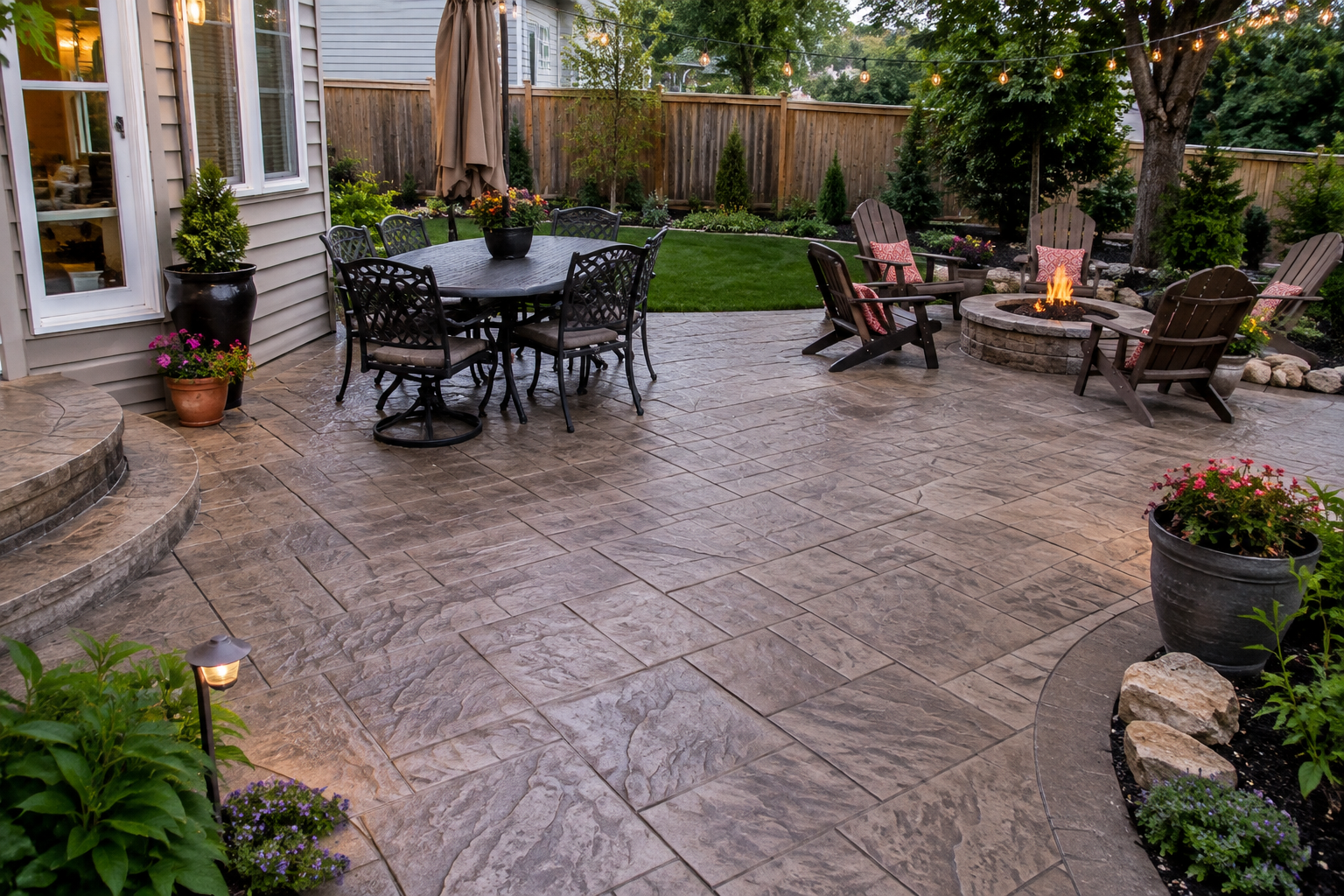
A decorative concrete patio should do more than look polished on installation day. It needs to support how your household uses the yard, direct water safely, and hold up in changing weather. Reviewing a full-size ashlar slate concrete stamp can help you picture how a repeating stone-style pattern will read across the entire space, not just in a small sample.
Start with function before color or texture. A patio that feels comfortable for dining, grilling, quiet mornings, and family gatherings will usually remain more useful than one designed around a pattern alone. The best results come from connecting design decisions with site conditions, construction details, and a realistic maintenance plan.
Table of Contents
- 1 Plan The Patio Around Daily Use
- 2 Set A Realistic Project Budget
- 3 Choose Pattern And Color With The Whole Property In Mind
- 4 Address Drainage, Weather, And The Base First
- 5 Understand Installation And Compare Contractors Carefully
- 6 Maintain The Surface Before Problems Build Up
- 7 Common Mistakes To Avoid
- 8 Final Planning Checklist
- 9 Conclusion
Plan The Patio Around Daily Use
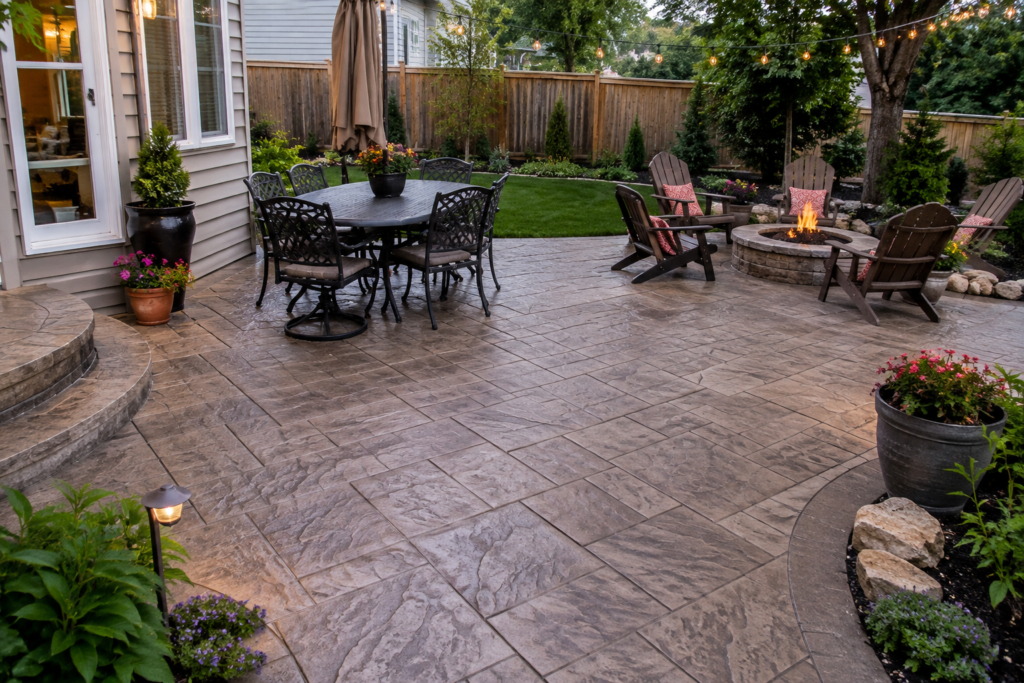
Think of the patio as an outdoor room with permanent flooring. Map where people will walk from the house, where doors swing, and where furniture needs open space. A dining table needs room for chairs to slide back, while a fire-pit arrangement needs safe circulation around the seating. Grills, pool gates, play areas, shade structures, and garden beds should all be considered in the footprint before work begins.
Leave generous paths between activity zones instead of filling every available inch with seating. Narrow passages and awkward edges can make a large patio feel cramped. If entertaining is a priority, plan for clear routes from the kitchen and enough level space for guests to move without stepping through the furniture arrangement.
Set A Realistic Project Budget
Decorative finishes are only one part of the cost. A complete estimate may include demolition of an existing surface, excavation, base material, concrete, reinforcement, coloring, pattern work, sealing, drainage changes, borders, steps, and site cleanup. Access can also matter. A backyard with limited access to equipment may require more labor than an open lot.
Keep a contingency amount for unexpected soil conditions, buried materials, drainage corrections, or changes requested after layout begins. Compare written estimates line by line because a low initial number may omit compaction, reinforcement, sealing, or removal work that another proposal includes.
Choose Pattern And Color With The Whole Property In Mind
Select A Pattern With The Right Scale
Stamped concrete can be patterned and textured to resemble several familiar materials, including brick, slate, flagstone, tile, and wood. An overview of stamped concrete patterns and textures illustrates why the technique works well for patios, walkways, and poolside areas. Stone-inspired layouts often suit natural landscapes, brick patterns complement traditional homes, and clean geometric designs can support a modern exterior.
Large patterns can bring order to an expansive patio and reduce visual clutter. Small, highly detailed patterns may be better as borders or in compact seating areas, where they will not overwhelm the space. Always view full-size samples outside. Direct sunlight, shade, landscaping, and the color of the home can change how the finish appears.
Build A Balanced Color Plan
Most decorative surfaces have a main slab color, an accent color that adds depth, and darker lines or recessed areas that define the pattern. Choose tones that relate to the home’s siding, brick, trim, roof, or existing stonework. Close shades create a restrained, natural result, while high contrast makes the pattern more pronounced.
Consider comfort and maintenance as well. Very dark surfaces can feel hotter in full sun and may show dust, pollen, or mineral deposits more readily. Samples are more reliable than phone images, especially when selecting warm grays, tans, browns, and blended earth tones.
Address Drainage, Weather, And The Base First
Water should move away from the home, exterior doors, foundation, and low areas of the yard. Review the patio slope, downspout outlets, nearby beds, pool or spa runoff, and any location where water already collects. A contractor should be able to explain how the finished elevation and drainage plan will handle heavy rain, snowmelt, and irrigation.
Climate affects curing, sealer selection, and long-term care. In regions with repeated freeze-and-thaw cycles, homeowners should ask about appropriate concrete specifications, joint layout, and winter deicing guidance. Avoid assuming that a decorative surface can correct poor drainage or unstable soil beneath it.
Preparation typically includes removing unsuitable material, setting the correct elevation, installing and compacting the base, placing forms, adding reinforcement where required, and checking drainage before the pour. Control joints are then planned to help manage normal shrinkage cracking. They do not guarantee a crack-free slab, but thoughtful placement can make joints less noticeable within the pattern.
Understand Installation And Compare Contractors Carefully
Installation generally moves from site layout and forms to concrete placement, leveling, color application, stamping, edge detailing, curing, cleaning, and sealing. Decorative work depends on timing. Weather, concrete mix, crew size, and site access can all affect the schedule and the window for creating a consistent texture.
Ask who will handle finishing and stamping, how many similar projects the team has completed, where the joints will be placed, and what curing protection is included. Also confirm drainage, cleanup responsibilities, insurance, permit requirements, warranty terms, and the plan if weather delays the pour. Keep children, pets, vehicles, and foot traffic away until the installer confirms the patio is ready for use.
Maintain The Surface Before Problems Build Up
A simple seasonal routine protects the investment. Sweep away grit and leaves, rinse accumulated dirt, clean food or oil spills promptly, and inspect edges and joints for movement or standing water. Follow the sealer manufacturer’s instructions instead of applying products on an arbitrary schedule.
Avoid harsh cleaning methods and deicers that are not approved for the surface. Furniture pads can reduce scratching, while planters should be raised slightly to limit trapped moisture and staining. Outdoor rugs can soften seating zones, but move them occasionally so dirt and moisture do not remain against the slab.
Common Mistakes To Avoid
- Choosing a pattern before measuring furniture zones and walking paths.
- Ignoring slope, downspouts, or water flow near the home.
- Using too many competing colors and textures in one patio area.
- Approving a finish without seeing samples in natural light.
- Accepting an estimate that does not clearly explain base preparation and joint placement.
- Allowing early foot traffic, vehicle traffic, or heavy furniture placement.
- Waiting too long to address stains, standing water, or drainage changes.
Final Planning Checklist
- Define the patio’s primary uses and furniture zones.
- Measure the area and review access from the home.
- Confirm slope, runoff paths, and drainage needs.
- Select a pattern and color plan that suits the property.
- Review full-size samples outdoors.
- Compare detailed contractor proposals.
- Confirm preparation, curing, control joints, and sealing.
- Set a practical cleaning and maintenance routine.
Conclusion
A durable decorative concrete patio is the result of practical planning, not pattern selection alone. When the layout, base, drainage, color, joints, installation process, and maintenance routine work together, the patio can remain attractive and functional.