
Running your boat on an electric motor is a great option. However, most of the time, you overlook whether you are using the boat on the ocean or a lake. This is an important point to consider. In this blog, we will take a look at how saltwater or freshwater affects the electric motor in a boat.
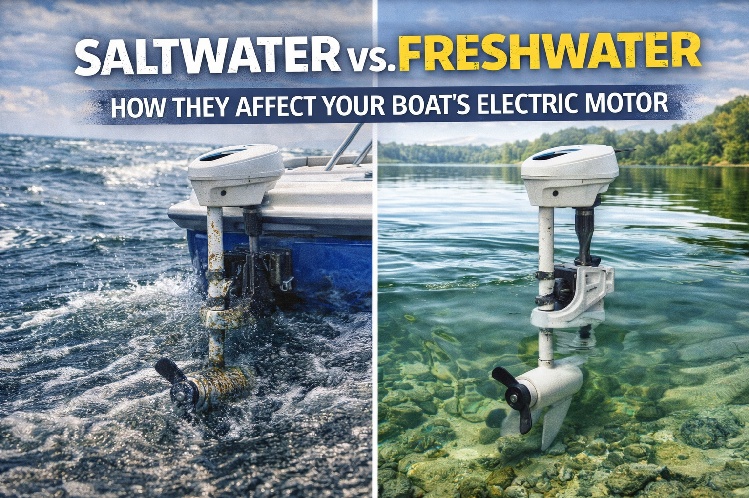
Table of Contents
Why Saltwater is Tougher on Motors?
Saltwater not only contains a lot of salt but also other components that can corrode metal or electrical items. Salt makes water conductive, allowing electricity to flow more easily through it. When this saltwater comes into contact with battery connections or wires, it creates problems. It may develop slowly or suddenly.
Small electric currents start flowing to parts where they shouldn’t. Over time, the metal parts corrode. The propeller and its shaft get damaged. In the majority of cases, the motor looks fine on the outside but degrades on the inside.
Freshwater: An Easy Option
Rivers and lakes are gentle on boat motors. There are no weird electrical problems. The metal parts also last longer. You can rinse the motor with a hose, let it dry well, and you are good to go.
However, there are some problems with freshwater as well. Weeds wrap around the propellers of electric boat motors. Mud and sand also get sucked and stuck in small openings. In some cases, the minerals in the water leave marks on the surface. However, that is not a major issue.
Things to Keep in Mind
If you boat a lot in saltwater, make sure that you rinse everything with regular freshwater every time. Wipe down the battery area and see that it is dry. Spray protective coating on connections and metal parts. Also, check for any white crusty buildup, as that might indicate the beginning of corrosion. Follow these steps even if you boat for just 15 minutes in saltwater.
If you boat in freshwater, quickly rinse to wash off plants and dirt. Pull off weeds from the propeller. Sometimes there might be fishing line wrapped around the shaft. It is a good idea to perform a basic wipe-down after every few trips. So, you need to be careful in either case.
Saltwater boaters have to spend more time cleaning their motor boats, approximately 20-30 minutes. On the contrary, freshwater boaters hardly need about 5-10 minutes.
The Battery Situation
The motor’s battery is also affected by environmental factors. Saltwater air is humid and corrosive. The salty air affects every part of the motor. Battery terminals often develop a white or green, crusty coating that can affect connections.
Batteries from suppliers like furthercustoms.com stay in good shape in freshwater environments. They need occasional cleaning, but there is no problem with salt spray and moisture.
Boating in saltwater needs extra maintenance to keep the boat motor in good condition. There is no such hassle in freshwater. Choose a motor that starts reliably and maintain it well for longevity and good performance. How you care for the product will directly affect its lifespan.