

My buddy Dave, who has been pickpocketed in Barcelona and mugged in his own American hometown, spent a week in Shanghai last spring and came back with one complaint: he gained four pounds eating dumplings. He never once felt unsafe walking back to his hotel at 1 a.m. So is it safe for Americans to travel to China? For an ordinary tourist on a normal itinerary, yes, the streets are often safer than the US city you flew out of, with low violent crime and almost no petty theft. The catch is that the real risk for Americans isn’t getting robbed, it’s arbitrary law enforcement, exit bans, and a phone that’s being watched the second you land. This post splits those two things apart so you know exactly which one applies to you.
Table of Contents
- 1 The Short Answer Before You Read Further
- 2 Everyday Safety in China’s Streets Beats Most US Cities
- 3 The Real Risk and Arbitrary Law Enforcement and Exit Bans
- 4 Who Needs to Worry, and Who Can Just Go
- 5 Your Phone, Your Data, and What Surveillance Changes Day to Day
- 6 What Not to Do as an American in China
- 7 Regions Where the Rules Change: Xinjiang and Tibet
- 8 Scenarios, Costs, and Logistics for the Independent Traveler
- 9 The World or Bust Verdict
- 10 FAQs about is it safe for Americans to travel to China?
- 10.1 Is it safe for Americans to travel to China right now?
- 10.2 Is it safe for Americans to travel to China in 2025 and 2026?
- 10.3 What is the China travel advisory level for Americans?
- 10.4 Can Americans get hit with China exit bans?
- 10.5 Is China safe for tourists compared to other countries?
- 10.6 What should I not do as an American in China?
- 10.7 Are device searches at the China border real?
- 10.8 Will my VPN and apps work in China?
- 10.9 Is China safe for solo female travelers?
- 10.10 Does $1000 cover a week in China?
The Short Answer Before You Read Further
Is it safe for Americans to travel to China? If you’re a regular tourist with no journalism credentials, no pending business dispute, no dual citizenship, and nothing politically loaded in your background, then yes, go. You’ll be fine, and you’ll probably feel safer than at home.
The US State Department puts China at Level 2, “Exercise Increased Caution,” not because of muggers but because of “arbitrary enforcement of local laws, including in relation to exit bans” (State Department, 2025). That’s the whole story in one line. Low physical danger, real legal danger for the wrong profile. The rest of this post tells you which side of that line you fall on. If you’re still weighing destinations, my take on whether a place is worth your vacation runs through the whole blog, like my breakdown of why Croatia disappointed me.
Everyday Safety in China’s Streets Beats Most US Cities
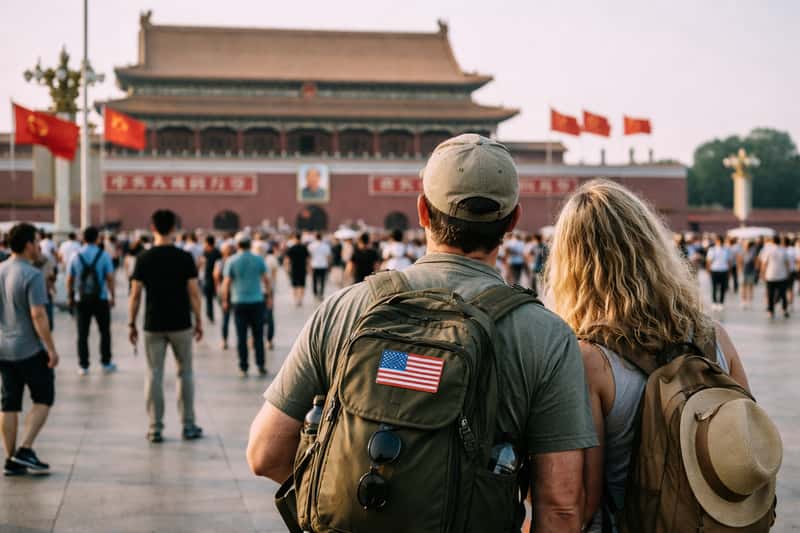
Here’s the part nobody who reads only headlines believes: China’s cities are extraordinarily safe to walk around. Violent crime against foreigners is rare. Pickpocketing, the bane of Rome and Barcelona, barely registers. People leave phones on restaurant tables and walk away. A travel vlogger who has hit 55 countries called China one of his top three safest places anywhere on the planet.
That safety isn’t an accident. It’s bought with a level of policing and camera coverage that would feel dystopian to most Americans. The same thing that makes you safe is the same thing that’s watching you. Hold that thought, because it matters later.
Crime Rates Compared to US Cities and Other Asian Destinations
Compared to a major US city, the math is lopsided. American cities post violent crime rates that dwarf what you’ll find in Beijing or Shanghai. China’s street crime sits low even by Asian standards, in the same calm range as Japan, well below what tourists see in parts of Southeast Asia.
So if your fear is getting jumped, mugged, or robbed, recalibrate. Statistically you’re trading down on that risk by flying to China, not up. The danger just moved categories, from the street to the legal system.
What the Heavy Police and Camera Presence Actually Buys You
Travelers describe it bluntly: everywhere you look, there’s police, military, or a security guard, and several cameras pointed at you at all times (traveler reports, 2024). That blanket surveillance is why the streets are so calm. Nobody’s snatching a purse under that many lenses.
The buy is real safety. The cost is that you are never anonymous. For a tourist taking temple photos, that’s a non-issue. For anyone the state has a reason to track, it’s the whole ballgame.
The Real Risk and Arbitrary Law Enforcement and Exit Bans
This is the section that actually answers the question. China’s risk to Americans isn’t crime, it’s the legal environment. Laws can be enforced arbitrarily, “without fair and transparent process under the law,” in the State Department’s own words. If the government decides you’re useful to hold, the normal rules you expect as an American don’t apply.
That’s the contrarian truth most fear-mongering articles miss. You’re not likely to be hurt. You could, in the wrong circumstances, be held. The University of Michigan’s travel guidance frames it the same way: most travelers experience nothing, but some face harassment, secondary inspection, or arbitrary arrest depending entirely on who they are. You can read the official entry, exit, and local-law breakdown on the State Department’s China country information page.
What an Exit Ban Is and Who It Has Actually Hit
An exit ban means you’re in the country legally and physically free, but you can’t leave. No charge, sometimes no explanation. It’s been used on people tied to business disputes, ongoing investigations, or relatives the state wants use over. You can land, tour for a week, and discover at the airport that your name flags.
The people it has actually hit share a pattern: financial disputes, dual nationality, political connections, or family caught in a Chinese legal matter. A backpacker eating noodles in Chengdu is not that pattern.
The State Department China Travel Advisory Level, Decoded
The China travel advisory level is currently 2 out of 4: “Exercise Increased Caution.” For context, Level 2 is the same tier as France or the UK. It is not “Reconsider Travel” (3) or “Do Not Travel” (4). The reason behind the level, though, is China-specific: exit bans and arbitrary enforcement, not crime or terrorism.
Decode it like this. The number says “go, with your eyes open.” The fine print says “your profile decides how open.”
Who Needs to Worry, and Who Can Just Go
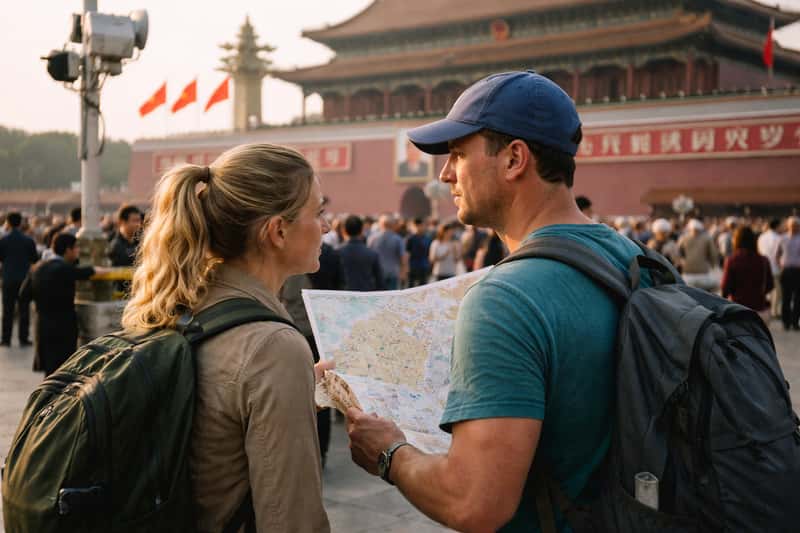
| Profile | Risk level | Why |
|---|---|---|
| Ordinary tourist | Low | No reason for state interest |
| Solo female traveler | Low | Street safety is high |
| Student / digital nomad | Low to moderate | Watch device and visa rules |
| Academic / researcher | Moderate | Secondary inspection risk |
| Tech worker / engineer | Moderate to high | Data and IP scrutiny |
| Journalist / activist | High | Direct detention risk |
| Former military / govt | Moderate to high | Background flags |
High-Scrutiny Profiles: Journalists, Tech Workers, Academics, Former Military
If you report for a living, work in sensitive tech, do China-related research, or carry a military or government background, you’re in a different conversation. These profiles draw secondary inspection at immigration, device interest, and in the worst cases, detention. The state benefits from holding people it sees as politically or economically useful.
That doesn’t mean you can’t go. It means you travel deliberately, scrub your devices, and assume you’re of interest. If that describes you, the academic-grade prep guides exist for exactly this reason.
The Ordinary Tourist Verdict
For everyone else, the verdict is flat: go. A normal American visiting the Great Wall, eating street food, riding the bullet train, and not poking at politics is in one of the safer travel situations on earth. The two-million-plus Americans who visit yearly mostly come home with full camera rolls and zero incidents.
You are not the target. Travel like it, and enjoy it.
Your Phone, Your Data, and What Surveillance Changes Day to Day
Day to day, surveillance changes less about your safety and more about your privacy. Assume your phone, laptop, and internet activity are visible. That’s not paranoia, it’s the operating environment. Plan around it the way you’d plan around weather.
Device Searches at the Border and Social Media You Posted Before You Left
Border officers can and do search devices. They can scroll your photos, messages, and apps. And here’s the part travelers forget: posts you made in the US, before you ever booked, are part of your footprint. A loud political thread from two years ago is still on your account.
If your digital history is clean and apolitical, this is a shrug. If it isn’t, travel with a wiped device and a fresh account, or reconsider the trip.
VPN Reality and the Apps That Won’t Work
Google, Gmail, Instagram, WhatsApp, Facebook, most Western news: blocked behind the Great Firewall. A VPN can punch through, but VPNs are unreliable and sometimes throttled, so don’t bet a critical workflow on one. Install and test it before you fly, because you can’t download it once you’re there.
Practically, get WeChat and a Chinese map app loaded ahead of time. They run the country. My budget-travel prep philosophy applies here too: sort the logistics before wheels-up, not after.
What Not to Do as an American in China
What not to do as an American in China is shorter and more specific than the generic “watch your wallet” lists. Don’t join or photograph protests. Don’t lecture locals on politics, Taiwan, Tibet, or Xinjiang. Don’t bring or touch drugs, ever, the penalties are severe. Don’t fly drones near anything official. Don’t photograph military or government sites.
Carry your passport and valid visa at all times. Skip the wallet anxiety, that’s a non-issue here. The trouble in China isn’t theft, it’s stepping on a legal tripwire you didn’t know was there.
Regions Where the Rules Change: Xinjiang and Tibet
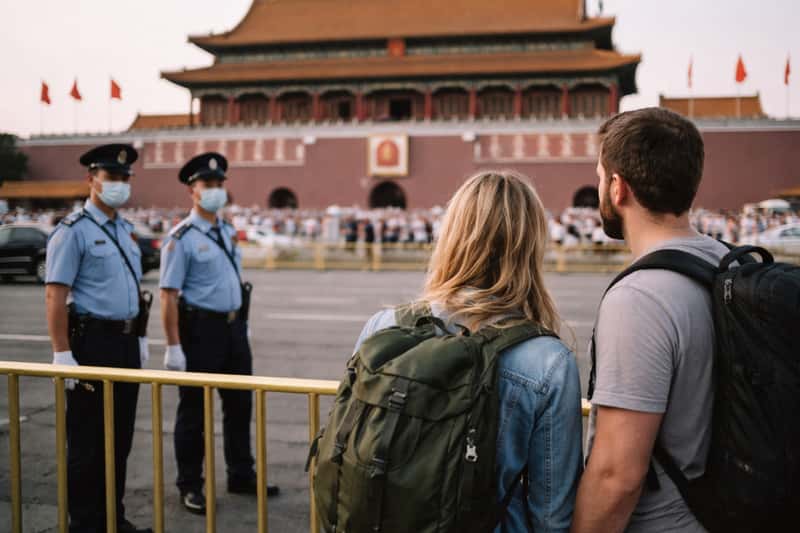
Most of China is straightforward. Xinjiang and Tibet are not. Authorities there impose curfews and travel restrictions on short notice, run extra security checkpoints, and apply heightened scrutiny that can blow up your itinerary with no warning.
Unless you have a specific, compelling reason to go, skip them. The friction-to-payoff ratio for a first-time tourist isn’t worth it, and “I couldn’t leave my hotel because of a sudden curfew” is a bad way to lose a vacation day.
Scenarios, Costs, and Logistics for the Independent Traveler
Different travelers have different China trips. Here’s how the real ones shake out, plus what a week actually costs.
Solo Female Travelers, Students, and Digital Nomads
Solo female travelers tend to rate China among the most comfortable places they’ve gone, because the same surveillance and low street crime that protects everyone protects them at night. Students are fine on a tourist itinerary but should keep visa paperwork tight and devices clean. Digital nomads can work fine, but treat the internet as blocked-by-default and VPN-dependent, and don’t plan to run a Western-dependent business in real time.
None of these profiles carry the high-scrutiny risk of journalists or tech workers. They just need to respect the digital reality.
Does $1000 Cover a Week, and How Cash vs Mobile Payment Works for Foreigners
Yes, $1000 covers a tourist week comfortably outside flights. Rough math: a clean mid-range hotel runs $35-$60 a night ($245-$420 for the week), street and casual food runs $10-$20 a day ($70-$140), high-speed trains and subways are cheap, and major sights are a few dollars each. That lands a full week in the $600-$800 range with room to spare.
Payment is the catch. China runs on mobile: Alipay and WeChat Pay, which now let foreigners link a foreign card. Set that up before you go, because cash is increasingly awkward and some vendors barely want it. For more on stretching a city cheaply, see my Paris-on-a-budget approach and apply the same logic.
The World or Bust Verdict
For the ordinary American tourist, China is a flat yes: safer streets than home, a week under $1000, and locals who are genuinely warm to Americans. The only people who should think hard are journalists, tech workers, academics, former military, and anyone with a legal or business mess that gives the state a reason to care. Know which one you are, and the answer writes itself.
FAQs about is it safe for Americans to travel to China?
Is it safe for Americans to travel to China right now?
Yes, for ordinary tourists. US citizens travel to China right now in large numbers without incident. The street-level risk is low; the legal risk applies mainly to high-scrutiny profiles, not regular travelers.
Is it safe for Americans to travel to China in 2025 and 2026?
The picture in 2025 and into 2026 is stable: Level 2 advisory, low crime, real but profile-specific legal risk. Nothing in the current advisory tells an ordinary tourist to stay home.
What is the China travel advisory level for Americans?
China sits at Level 2, “Exercise Increased Caution,” the same tier as many Western European countries. The reason is arbitrary enforcement of local laws and exit bans, not crime or terrorism.
Can Americans get hit with China exit bans?
Yes, but it’s targeted. China exit bans for Americans mostly affect people tied to business disputes, investigations, dual nationality, or political use. A tourist on a normal itinerary is very unlikely to be affected.
Is China safe for tourists compared to other countries?
China is safer for tourists than most major US cities and on par with Japan for low crime. Pickpocketing and violent crime against foreigners are rare across major Chinese cities.
What should I not do as an American in China?
What not to do as an American in China: avoid protests, drugs, drones near official sites, and photographing military or government buildings. Don’t push political topics, and always carry your passport and valid visa.
Are device searches at the China border real?
Yes. Border officers can search phones and laptops, including old social media posts you made in the US. If your digital history is sensitive, travel with a wiped device and a clean account.
Will my VPN and apps work in China?
VPNs work inconsistently, so install and test one before you fly. Google, Instagram, WhatsApp, and most Western apps are blocked, so download WeChat, Alipay, and a Chinese map app in advance.
Is China safe for solo female travelers?
Yes. Solo female travelers consistently rate China among the most comfortable destinations they’ve visited, thanks to low street crime and heavy security presence, especially at night.
Does $1000 cover a week in China?
Comfortably. A tourist week in China typically runs $600-$800 outside flights, covering a mid-range hotel, daily food, trains, and major sights. Set up Alipay or WeChat Pay before arriving, since mobile payment dominates.