
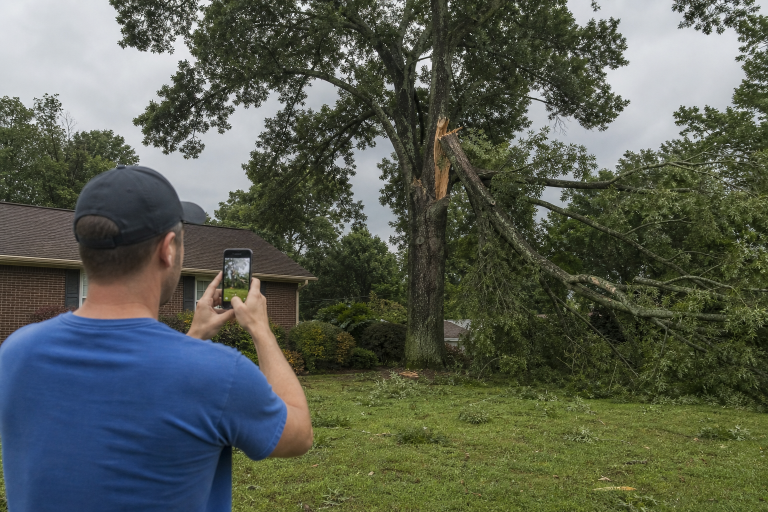
Rock Hill homeowners often value mature trees for shade, curb appeal, and relief from South Carolina summer heat. Still, a storm-damaged, leaning, or declining tree can become a serious safety concern. Knowing when to call for tree cutting in Rock Hill, SC can help protect your home while avoiding the unnecessary loss of a healthy tree.
The right choice is rarely based on one symptom alone. A tree with a few broken outer limbs may recover well, while a leafy tree with a deep trunk crack, failing roots, or hidden decay may need prompt action. Rock Hill’s periods of heavy rain, saturated clay soil, strong thunderstorms, and occasional tropical weather can expose previously unseen weaknesses.
Table of Contents
Why the Decision Is Not Always Simple
Not every scar, cavity, or patch of dead branches means a tree must come down. Older oaks, maples, pines, and ornamental trees throughout Rock Hill may carry minor defects for years without creating an immediate hazard. At the same time, a tree can look green and vigorous while decay spreads inside a limb or trunk.
The goal is to manage risk without removing trees simply because they look imperfect. A thoughtful decision considers the tree’s health, structure, root condition, wind exposure, and the people or property beneath it. Professional assessments use that broader approach to identify hazards and recommend practical ways to keep risk at an acceptable level.
After a severe storm, a tree that has shifted toward a house, dropped large limbs, or become entangled near utility equipment should not be treated as a routine weekend project. Calling an emergency tree service in Rock Hill, SC is often the safer response when there is an immediate threat to people, structures, vehicles, or access to the property.
Start With a Safe Visual Check
Inspect a questionable tree from the ground and from a safe distance. Do not climb it; use a ladder beneath damaged limbs or pull on hanging branches. Take photographs after storms to compare changes over time and document conditions for insurance purposes, if needed.
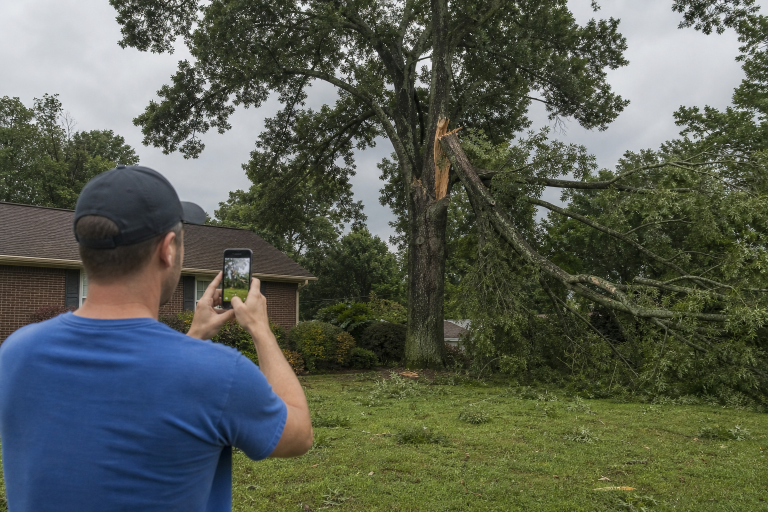
- Look for broken, hanging, or partially detached limbs.
- Check for fresh cracks in the trunk or at the junction of major stems.
- Watch for raised soil, exposed roots, or a root plate lifting on one side.
- Note a new or worsening lean, especially after heavy rain or wind.
- Look for cavities, missing bark, fungal growth, or large dead canopy sections.
- Consider what the tree could strike if it failed.
If a branch contacts a power line, stay well away and contact the utility provider or emergency services. Downed lines and unstable trees should always be treated as dangerous, even when the line appears inactive.
Signs a Tree May Be Worth Saving
A healthy tree with stable roots and limited canopy damage may be a good candidate for corrective pruning and monitoring. For example, a mature shade tree that loses a few smaller limbs during a Rock Hill thunderstorm can often recover if the main trunk and major branch unions remain sound.
Conditions That Support Preservation
- The trunk is solid, with no deep split or extensive decay.
- The soil and root area have not shifted or heaved.
- Damage is limited to small or secondary branches.
- The remaining canopy has normal leaf growth and good vigor.
- The tree is not positioned where a small failure could cause major harm.
Careful pruning removes broken wood, improves clearance, and reduces stress from torn branches. According to guidance on assessing and caring for damaged trees, clean cuts outside the branch collar and sensible post-storm care can support recovery, while topping and flush cuts can create additional problems.
When Pruning Is the Right Choice
Pruning is a targeted maintenance tool, not a universal cure. It can be useful when deadwood hangs over a walkway, limbs rub against a roof, or a canopy needs modest weight reduction after storm damage. It should preserve as much healthy structure as possible.
- Remove immediate hazards, beginning with broken limbs over active areas.
- Make clean, appropriate cuts rather than leaving long stubs.
- Avoid removing excessive live canopy in one visit.
- Do not top the tree or cut large limbs without a clear structural reason.
- Schedule monitoring when cracks, cavities, or decay remain a concern.
Red Flags That May Point Toward Removal
Some defects cannot be corrected with pruning. Removal becomes more likely when the tree has lost structural integrity or when its location makes failure unacceptable. This is especially true for trees close to bedrooms, parking areas, fences, busy sidewalks, or neighboring property.
- A split trunk or crack extending through a major stem.
- Two large stems pulling apart at a weak, narrow union.
- Roots lifting from the ground or substantial soil movement.
- A sudden lean that was not present before.
- A dead tree standing within striking distance of a target.
- Large cavities paired with visible decay or dead canopy sections.
- Storm damage that leaves the main trunk unstable or severely unbalanced.
Tree risk evaluation is more than a quick visual opinion. The tree risk assessment process used by arboriculture professionals considers defects, site conditions, potential targets, and options for reducing risk rather than assuming removal is always the answer.
Consider What the Tree Could Hit
A defect that may be manageable in a large back corner can demand faster action beside a Rock Hill home or neighborhood street. Think about how often people use the area and what could be damaged if a limb or the entire tree fell.
- Is the tree within reach of a roof, garage, vehicle, or fence?
- Do children, pets, guests, or delivery drivers pass beneath it?
- Could failure block a driveway or emergency access?
- Would the tree affect a neighbor’s property or public sidewalk?
Questions to Ask Before Work Begins
Before approving pruning or removal, ask what specific condition is driving the recommendation. A reputable provider should explain whether pruning, cabling, monitoring, or removal is appropriate, how the work area will be protected, whether cleanup is included, and if local approvals may apply. Rock Hill homeowners should also verify insurance coverage and avoid choosing solely on the lowest estimate.
Plan for Future Storms
Regular care can reduce future problems. Inspect mature trees annually, remove deadwood before storm season, keep mulch away from trunks, avoid compacting soil over roots, and water deeply during prolonged dry spells. Young trees benefit from early structural pruning that encourages strong branch spacing before they become large enough to threaten nearby homes.
Conclusion
Choosing whether to save, prune, or remove a tree in Rock Hill, SC requires a balanced look at health, structure, location, and likely future risk. Limited branch damage may be manageable, but unstable roots, deep trunk splits, and severe decay call for prompt professional attention. Acting early can protect your property while preserving the healthy trees that make your landscape more comfortable and valuable.