
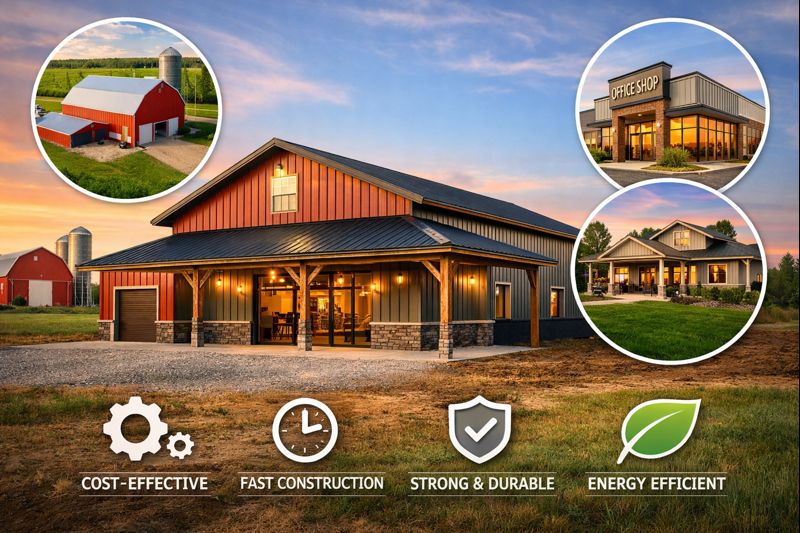
Post-frame construction is shaping the future of the building industry with its efficiency, sustainability, and affordability. As demand grows for durable, adaptable building solutions, post frame building construction stands out as a modern answer for projects of all sizes, from agricultural barns to retail stores and custom homes.
This construction method uses widely spaced, solid posts anchored deep into the ground, delivering unmatched structural strength and rapid build times. By embracing these techniques, builders and project managers can reduce costs while gaining design flexibility. These advantages are driving the popularity of post-frame buildings among home and business owners, as well as in the commercial, agricultural, and community sectors.
The demand for resilient structures that offer long-term value is only increasing. Post-frame construction delivers on the needs for budget-friendly, time-efficient, and environmentally conscious building solutions. Its versatility and adaptability are transforming expectations across the construction industry as builders seek to do more with less time and fewer resources.
Whether constructing rural storage facilities or contemporary public buildings, this building technique’s efficiency and adaptability offer solutions that range from small personal workshops to large commercial centers.
Table of Contents
Superior Structural Integrity
At the heart of the post-frame method is its uncompromising structural strength. The use of large, sturdy columns embedded deeply in the earth means these buildings stand strong against wind, snow loads, and even seismic activity. Unlike traditional stick framing, the load is distributed efficiently across the structure, resulting in longevity and resilience. According to the National Frame Building Association, modern post-frame structures are built to endure generations of use, even under demanding conditions. This makes them an ideal choice for climates susceptible to extreme weather events.
Cost-Effectiveness
One of the primary drivers of the increasing adoption of post-frame buildings is their affordability. Builders can space columns farther apart than studs in conventional framing, reducing the need for lumber and cutting down on the total volume of materials used. Not only does this keep material costs lower, but it also streamlines construction, requiring less labor and reducing the overall project cost. Additionally, the simplified process helps avoid many of the unforeseen delays and additional costs associated with traditional methods.
Faster Construction Speed
Another standout feature is the speed at which post-frame buildings can be assembled. Fewer components and larger prefabricated sections lead to much faster project completion, resulting in less downtime and quicker access to your space. For example, some cutting-edge projects have demonstrated that entire two-story homes can be assembled within just a single day. This efficiency is particularly beneficial for commercial ventures or public infrastructure, where lost time equates to lost revenue or services.
Design Flexibility
Expansive, open interiors are a hallmark of post-frame construction, as it lacks interior supporting walls. Whether you need a wide-span warehouse, an open-concept retail space, or a custom family home, post-frame design can accommodate a wide array of layouts and styles. Large, unobstructed spaces not only enhance versatility but also improve natural lighting and airflow throughout the building. This flexibility is being recognized by both architects and developers looking to maximize every square foot—without being limited by structural walls.
Enhanced Energy Efficiency
Energy conservation is top of mind for many property owners, and post-frame buildings are naturally equipped to achieve higher efficiency. The spacing between columns allows for continuous, unbroken insulation, reducing thermal bridging and air leaks. As a result, both heating and cooling costs can be significantly reduced throughout the building’s lifespan. The continuous insulation envelope creates a barrier that limits the transfer of heat from the outside, yielding real savings on utility bills and reducing the building’s environmental impact.
Sustainability and Environmental Impact
Reducing the environmental footprint of construction projects is a growing priority. Post-frame construction uses less material than conventional approaches, thereby reducing site waste and resource extraction. Timber, the primary material, is both renewable and less carbon-intensive to produce than concrete or steel. Furthermore, many post-frame projects avoid energy-intensive slab foundations entirely, further decreasing carbon emissions. The efficient use of resources and renewable materials positions post-frame buildings as an attractive choice for sustainability-focused projects.
Diverse Applications
The wide range of uses for post-frame buildings has made them a staple across numerous sectors. Agricultural barns and rural storage units once dominated, but today the approach is commonly used for community centers, schools, office complexes, religious facilities, and even residential homes. The open layout also offers excellent opportunities for retrofitting and adapting spaces as needs change over time. Because these buildings are easy to expand and modify, they remain useful far beyond their initial purpose—a practical benefit as community and business demands shift.
Conclusion
Post-frame construction has emerged as a leading solution for efficient, durable, and sustainable building projects. Its superior strength, budget-friendly approach, rapid build times, and flexible design have caught the attention of architects, developers, and property owners eager for practical, future-ready structures. As the construction industry continues to evolve, this innovative method is set to play a central role in building smarter, greener, and more adaptive spaces for generations to come.