
Table of Contents
- 1 Introduction to Wellsite Automation
- 2 Key Components of Wellsite Automation
- 3
- 4 Benefits of Implementing Automation at Wellsites
- 5 Real-World Applications and Success Stories
- 6 Challenges in Adopting Wellsite Automation
- 7 Future Trends in Wellsite Automation
- 8 Steps to Implement Automation in Wellsite Operations
- 9 Final Thoughts
Introduction to Wellsite Automation
In the highly competitive oil and gas sector, organizations are under constant pressure to maximize production while minimizing risks and costs. Efficiency is no longer optional—it is the key to survival and success. Wellsite automation is ushering in a new era where companies deploy cutting-edge technologies to monitor, control, and optimize wellsite operations. By integrating automated systems and real-time monitoring, companies like Renegade OFS are helping drive both operational and financial performance to new heights.
The automation revolution in oil and gas extends far beyond productivity enhancements. As operators face growing complexity, shifting regulations, and increasing safety demands, automated wellsite management offers a powerful solution. Through enhanced data acquisition, remote oversight, and minimized manual interventions, companies can ensure safer operating environments, reduce downtime, and extract more value from every well.
By leveraging state-of-the-art hardware, intelligent software, and interconnected networks, businesses can streamline workflows across the field. Automation empowers teams with the visibility and control needed to make faster, more informed decisions—from anywhere, at any time.
With the global energy landscape evolving rapidly, the adoption of wellsite automation is an essential step toward achieving operational excellence. As this technology becomes more advanced and accessible, it sets a new benchmark for efficiency, reliability, and sustainability.
Key Components of Wellsite Automation
Successful wellsite automation depends on a blend of technology layers working in concert. The essential components include:
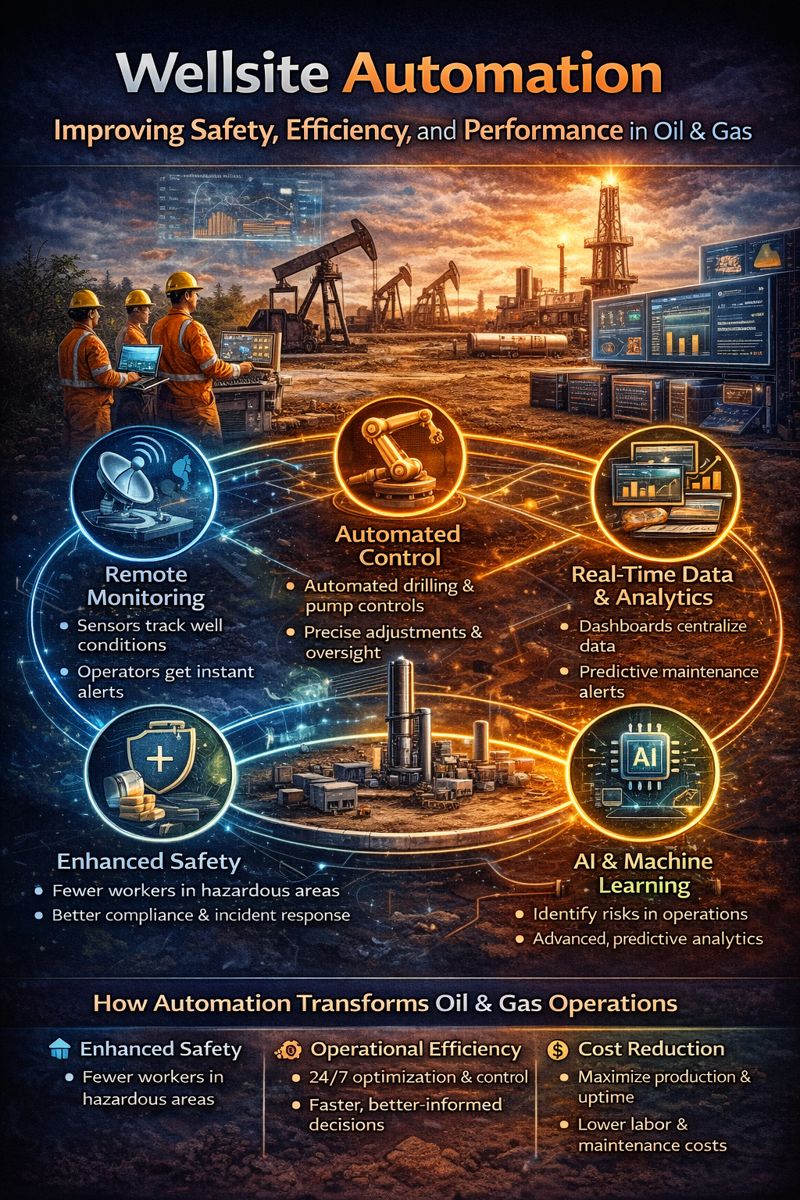
- Remote Monitoring Systems: These integrated sensors and devices continuously collect and transmit real-time data regarding wellsite conditions, equipment performance, and potential hazards. Operators can instantly diagnose issues without setting foot on-site, substantially reducing both risks and response times.
- Automated Control Systems: Precision control is at the heart of automation. These systems enable automated management of drilling and extraction steps, optimizing parameters and guiding processes with minimal human intervention. The result is improved performance, fewer costly errors, and enhanced workplace safety.
- Data Analytics Platforms: Centralized analytics platforms aggregate and process information from across the wellsite. Advanced algorithms and machine learning offer predictive insights for maintenance and operational strategies, enhancing uptime and asset longevity.
Benefits of Implementing Automation at Wellsites
- Enhanced Safety: By reducing the need for hands-on labor in hazardous environments, automation leads to fewer incidents and improved compliance with safety standards.
- Operational Efficiency: Machine-driven systems work around the clock, optimizing production schedules, preventing bottlenecks, and minimizing unplanned stoppages.
- Cost Reduction: Automated workflows lead to significant savings in labor, equipment maintenance, and energy consumption, while also enhancing production output.
Real-World Applications and Success Stories
Leaders in oil and gas are already demonstrating the game-changing impacts of automation. For instance, ExxonMobil’s deployment of high-frequency data integration, paired with machine learning algorithms, has resulted in remarkable reductions in operating downtime, saving the company an estimated $50 million per year. These systems incorporate real-time diagnostics and proactive issue resolution, maximizing uptime and minimizing costly disruptions. ExxonMobil’s journey is just one example of how data-driven approaches can revolutionize field operations.
According to Forbes, automated solutions in oilfields represent a strategic edge, providing superior asset management, more accurate forecasting, and agile execution in an increasingly demanding marketplace.
Challenges in Adopting Wellsite Automation
- High Initial Investment: While the long-term savings are substantial, the upfront expenses for deploying automation technology and upskilling personnel are significant considerations for most organizations.
- Integration Complexities: Seamlessly combining new automation solutions with legacy equipment and IT infrastructure often poses technical and operational challenges that require a well-planned approach.
- Workforce Adaptation: Gaining buy-in from employees and developing the necessary skills to manage and maintain advanced systems can be a significant cultural shift, requiring comprehensive training and ongoing support.
Future Trends in Wellsite Automation
The future of wellsite automation is defined by even more advanced digital technologies:
- Artificial Intelligence: AI is accelerating real-time decision-making, predictive maintenance, and performance optimization through smarter data analysis and adaptive system responses.
- Internet of Things (IoT): The rise of connected devices ensures broader, deeper, and more granular data capture, allowing for nuanced monitoring and proactive management of every wellsite function.
- Autonomous Operations: With the evolution of fully autonomous drilling rigs and supply chains, the oil and gas sector is transitioning toward 24/7 operations that require minimal human intervention while simultaneously enhancing safety and efficiency.
Steps to Implement Automation in Wellsite Operations
- Assessment: Conduct a comprehensive audit of current wellsite processes to identify opportunities for automation and vulnerabilities.
- Technology Selection: Select automation tools and platforms that align with the operation’s goals and the existing technologies in deployment.
- Training: Engage and upskill teams through targeted training programs that foster comfort and expertise with the new automated architecture.
- Continuous Evaluation: Institute robust performance monitoring and regular review cycles to adapt and refine the automation infrastructure for maximum benefit.
Final Thoughts
As digital innovation accelerates, automation will drive the next wave of productivity and value in the oil and gas industry. Companies ready to invest in wellsite automation today are set to outperform tomorrow, capitalizing on safer working conditions, streamlined operations, and sustainably higher profits. The future belongs to those who act decisively and embrace the transformative potential of these advanced technologies.