
Tight urban construction sites leave little margin for poor planning. A crane must share limited space with delivery trucks, stored materials, workers, neighboring properties, pedestrians, and active traffic lanes. Choosing experienced professional crane contractors early in the project can help the team identify realistic setup locations, access constraints, and lifting sequences before equipment arrives.
Successful crane work is not simply about finding a machine that can pick up the load. It requires a coordinated plan covering the load path, operating radius, site conditions, permits, crew communication, weather limits, and protection for people outside the work zone.
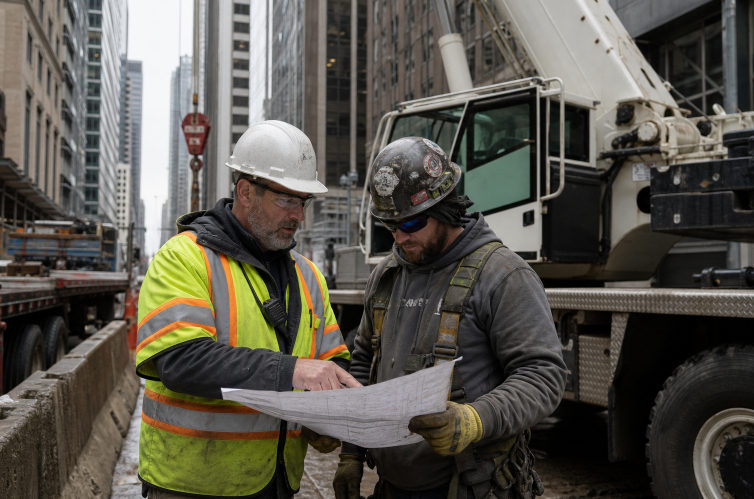
Table of Contents
- 1 Why Urban Crane Work Needs Extra Planning
- 2 Start With The Load And The Lift Path
- 3 Tower Cranes And Mobile Cranes
- 4 Check Ground Conditions Before Delivery
- 5 Build A Site Access And Traffic Plan
- 6 Account For Overhead And Weather Hazards
- 7 Assign Clear Roles Before The First Lift
- 8 Use Technology Without Losing Human Oversight
- 9 A Practical Crane Planning Checklist
- 10 Common Questions About Urban Crane Planning
- 11 Conclusion
Why Urban Crane Work Needs Extra Planning
City projects often place cranes beside occupied buildings, public sidewalks, utilities, streetlights, power lines, and narrow alleys. Laydown space may be limited, and noise restrictions or designated delivery windows can compress the schedule. A lift that appears straightforward on a drawing can become complex once the full route and surrounding activity are considered.
For example, a rooftop HVAC lift may require a temporary street closure, a scheduled truck arrival, a protected pedestrian detour, a controlled fall zone, and a narrow window before traffic control is removed. Each detail affects whether the crane can safely mobilize and complete the lift.
Start With The Load And The Lift Path
Before selecting equipment, define every planned lift. Projects involving communications infrastructure may also require specialized support, and teams researching cell tower crane rentals Asheville NC, should confirm that the proposed crane, rigging, access route, and work area suit the specific site conditions.
The manufacturer’s load chart, rather than the crane’s largest listed capacity, determines whether a lift is feasible. Capacity can decline sharply as boom length and working radius increase. A qualified lift planner should verify:
- The load’s total confirmed weight.
- The weight of slings, shackles, spreader bars, lifting beams, and hook blocks.
- Required lift height and clearance above obstacles.
- The radius from the crane’s center of rotation to the final set point.
- The complete path from pickup through travel and placement.
- Whether the load could pass over roads, occupied areas, structures, or equipment.
Tower Cranes And Mobile Cranes
When A Tower Crane Makes Sense
A tower crane can be a strong fit for long-duration high-rise work with frequent lifts across multiple floors. Its fixed position supports predictable material handling and broad site coverage without repeatedly moving a large vehicle through a congested project.
When A Mobile Crane May Be Better
Mobile cranes are often practical for short-term equipment setting, steel erection, industrial work, or lifts that shift between locations. They can mobilize and leave quickly, but they need adequate access, a setup room, and reliable support beneath outriggers or tracks. Bigger is not automatically better. A properly sized crane with a simpler setup may reduce disruption and improve control.
Check Ground Conditions Before Delivery
A level surface is not necessarily a suitable crane surface. Pavement, soil, slopes, recently filled areas, utility tunnels, trenches, culverts, basements, and underground vaults can all affect stability. The superintendent, crane provider, engineer, and qualified site personnel should review the setup area before mobilization. Outrigger mats may spread load pressure, but they do not correct unknown voids or inadequate bearing capacity.
Federal crane requirements address operator qualification, inspections, work-area controls, and hazards around lifting operations, so project teams should incorporate the applicable crane safety requirements into site-specific planning rather than treating compliance as a last-minute task.
Build A Site Access And Traffic Plan
Urban crane work depends on logistics as much as lifting capacity. Plan delivery routes, truck turning movements, counterweight staging, rigging storage, lane closures, barriers, spotters, and emergency access. Delivery windows should avoid peak pedestrian and vehicle activity whenever possible. Effective work-zone traffic management also helps project teams account for delays, access needs, and changing street conditions before they affect the lift.
Account For Overhead And Weather Hazards
Identify power lines, adjacent cranes, building edges, signs, temporary structures, and communication equipment along the boom and load path. Establish weather limits before the lift, including wind speed, gusts, lightning, heavy rain, snow, ice, reduced visibility, and softened ground after storms. The operator must have unambiguous authority to stop work if conditions no longer match the plan.
Assign Clear Roles Before The First Lift
Every complex lift requires a lift planner or supervisor, a crane operator, a qualified rigger, a signal person, a superintendent, and a ground crew. The pre-lift meeting should confirm the load weight, lift path, rigging condition, radio channel, hand signals, overhead hazards, restricted area, weather limits, and the person authorized to call a stop.
Use Technology Without Losing Human Oversight
Digital lift plans, 3D models, GPS positioning, wind monitors, and load monitoring can reveal conflicts before mobilization. These tools are valuable only when the measurements and site information are up to date. They should support, not replace, qualified judgment from the people responsible for the lift.
A Practical Crane Planning Checklist
- Verify every load, rigging component, radius, height, and set point.
- Select the crane based on chart capacity, reach, mobility, and setup constraints.
- Review ground bearing conditions, underground features, and overhead obstacles.
- Coordinate permits, street control, deliveries, public protection, and emergency access.
- Assign the crew, establish weather limits, and conduct a pre-lift briefing.
Common Questions About Urban Crane Planning
How Early Should Planning Begin?
Begin during early site logistics and structural coordination. Crane choices can influence foundations, material staging, road access, construction sequencing, and building design decisions.
Can A Crane Lift Over A Public Street?
Only when local requirements, permits, traffic controls, and the documented lift plan allow it. Public areas require careful exclusion-zone planning and should never be included casually in a load path.
What Is The Most Common Planning Mistake?
Focusing only on the load weight. Radius, rigging, ground conditions, travel path, overhead conflicts, and access restrictions can be equally important.
Conclusion
Safe urban crane work starts well before the boom rises. When teams integrate the load, equipment, ground, route, crew, and weather into a single clear plan, they can reduce delays, protect the public, and ensure more reliable lifting operations.