
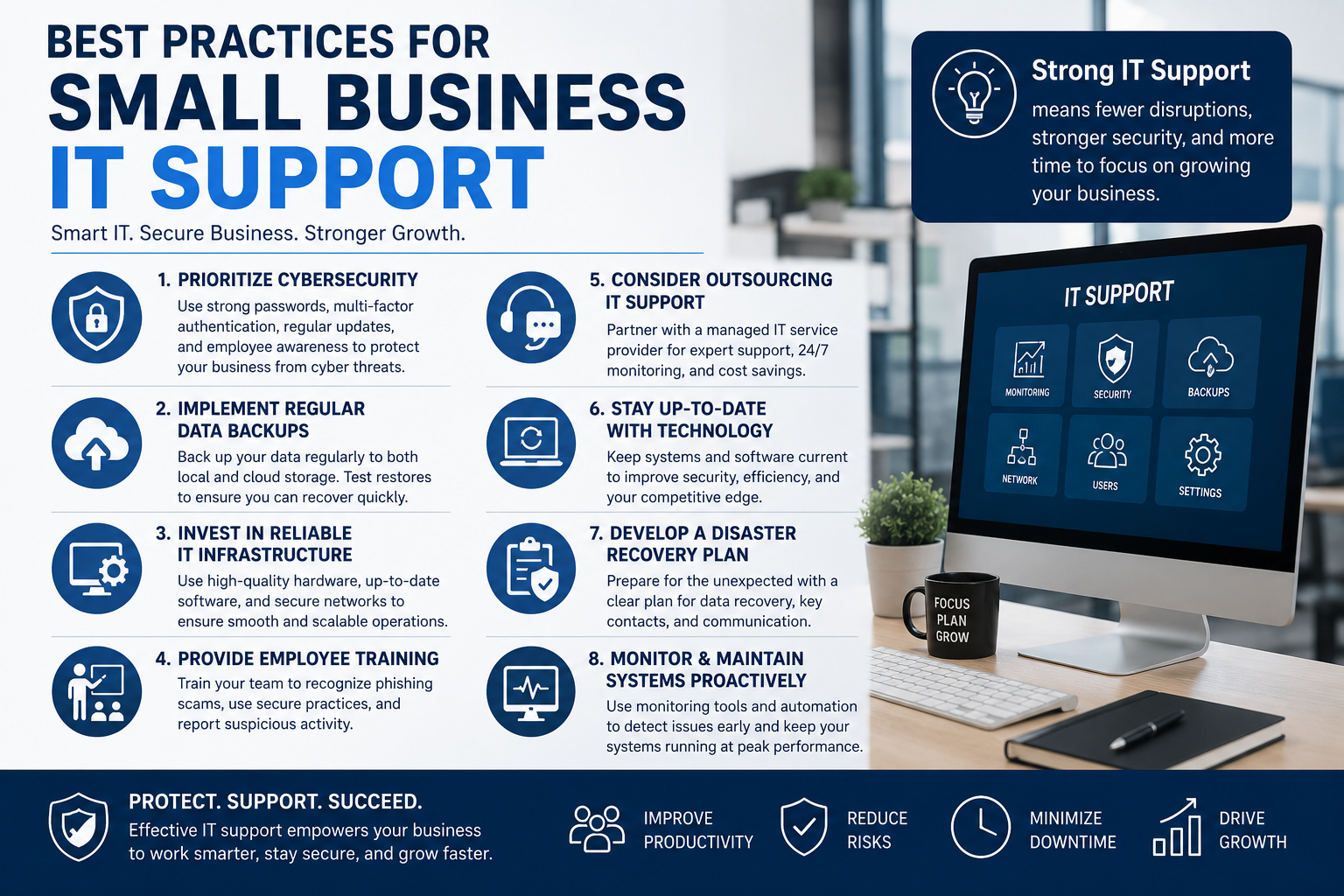
Effective IT support is essential for maintaining smooth operations in small businesses, where limited resources often require efficient and proactive technology management. From managing hardware and software issues to ensuring network security and data protection, strong support practices help reduce downtime and improve productivity. As digital tools become increasingly central to everyday operations, having structured approaches to troubleshooting, maintenance, and user assistance is critical for long-term stability. Many organizations also rely on small business IT support to bridge technical skill gaps and maintain reliable system performance. This helps ensure continuity even when internal technical expertise is limited or unavailable.
Best practices typically include regular system updates, clear documentation, preventive maintenance, and well-defined incident response procedures. Training users to recognize basic issues and adopt secure computing habits also strengthens overall resilience. By combining structured processes with consistent monitoring, businesses can minimize disruptions and ensure technology effectively supports daily workflows.
Table of Contents
Prioritize Cybersecurity
Cyber threats often target small businesses, viewing them as easier entry points compared to large corporations. It is vital to implement essential cybersecurity measures, such as strong password policies, multi-factor authentication, and regular patch management, which are often strengthened through Managed IT Services that help standardize and monitor security practices. Skipping any of these steps can create vulnerabilities that expose confidential information and disrupt operations. Cyberattacks on small companies are frequently devastating because many lack the necessary defenses and recovery plans, underscoring the importance of consistent oversight and preventive strategies for long-term resilience.
Implement Regular Data Backups
Data is the backbone of modern business. Losing even a small amount can result in financial loss, damage to reputation, and regulatory penalties. Schedule regular backups that include both local devices and secure cloud storage to ensure critical information is always retrievable. Test your restoration process regularly so you are prepared to recover key files if needed. Following the advice of the Cybersecurity and Infrastructure Security Agency (CISA), a hybrid backup approach that combines on-site and off-site solutions provides the best balance of speed and disaster recovery.
Invest in Reliable IT Infrastructure
Cutting corners on hardware or software can lead to frequent outages, loss of productivity, and frustrated employees. Choosing business-grade computers, networking gear, and applications ensures smoother day-to-day operations. Cloud-based solutions have become increasingly popular with small businesses for their flexibility and scalability, enabling remote access and simplified updates that keep you running smoothly as your needs evolve.
Provide Employee Training
Employees are often the first line of defense against cyber threats such as phishing or social engineering. Ongoing training helps staff recognize suspicious behaviors, avoid dangerous links or downloads, and follow safe password practices. Cultivating a culture of awareness and responsibility is crucial. Employees should know whom to contact when they spot something unusual and feel empowered to act defensively to protect business assets.
Consider Outsourcing IT Support
Maintaining a full-time, in-house IT team is not always feasible or cost-effective, especially for smaller enterprises. Outsourcing IT to managed service providers gives you access to a broader range of expertise, round-the-clock system monitoring, and proactive problem resolution. This arrangement allows internal resources to focus on core tasks while providing peace of mind that technology issues will be handled swiftly and professionally.
Stay Up-to-Date with Technology
Failing to keep up with new technological advancements can leave your business at a disadvantage. Regularly review your systems to identify outdated software or hardware and plan for upgrades. Staying current not only helps defend against cyber threats but also unlocks new capabilities for automation, remote work, and customer engagement. Trends such as cloud computing and collaboration tools are transforming how small businesses operate and compete in the digital world.
Develop a Disaster Recovery Plan
Natural disasters, ransomware, or even simple equipment failure can suddenly halt business operations. Drafting and testing a disaster recovery plan prepares your company for the unexpected. This plan should include steps for data restoration, key contacts, roles and responsibilities, and communication procedures during a crisis. Make your disaster recovery plan an integral part of your annual business review, updating it as systems or staff change.
Monitor and Maintain Systems Proactively
Proactive IT maintenance detects and addresses potential issues before they disrupt your business. Automation tools can run regular system health checks, deploy updates, and identify unusual activity, reducing downtime and improving reliability. Establish audit trails and clear accountability to track changes and respond quickly to incidents. This reduces risk and increases confidence that your technology supports, not hinders, your growth.
Conclusion
In today’s fast-moving digital environment, strong IT support is a cornerstone of success for small businesses. By prioritizing cybersecurity, maintaining reliable backups, investing in dependable infrastructure, and training employees, organizations can significantly reduce risks and improve operational efficiency. Proactive maintenance, clear disaster recovery planning, and the strategic use of outsourced support further strengthen resilience against unexpected disruptions. Staying current with evolving technology ensures businesses remain competitive and adaptable, while structured processes help maintain consistency across daily operations. Ultimately, combining prevention, preparation, and ongoing monitoring allows small businesses to minimize downtime, protect critical data, and create a stable foundation for sustainable long-term growth and productivity.