
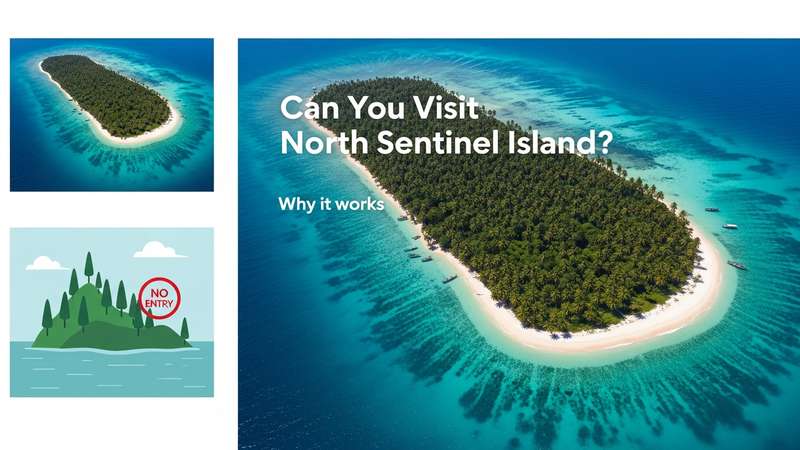
Surrounded by turquoise waters and dense forests, an island in the Bay of Bengal guards one of Earth’s last untouched civilizations. Many are captivated by stories of arrows fired from its beaches and the mystery of a people who have stayed unseen and uncontacted for thousands of years. Beneath that fascination lies a deeper lesson about ecological balance, cultural diversity, and the disastrous effects of intrusion. Understanding why this place remains strictly off-limits helps us appreciate the sanctity, both natural and human, that defines North Sentinel Island.
Table of Contents
- 1 Locating North Sentinel Island
- 2 The Uncontacted Sentinelese Tribe
- 3 Why Visiting North Sentinel Island is Strictly Forbidden
- 4 A History of Contact Attempts and Hostility
- 5 The Tragic Mission of John Allen Chau
- 6 The Dangers of Contact: A Two-Way Threat
- 7 The Ecological and Anthropological Value of Isolation
- 8 Modern Threats and the Question of Drones
- 9 TheWorldOrBust Reflection
- 10 FAQs about North Sentinel Island
Locating North Sentinel Island
North Sentinel Island sits in the Bay of Bengal and is part of India’s Andaman and Nicobar Islands archipelago. It lies about 36 kilometers west of South Andaman Island and roughly 50 kilometers from Port Blair, the island group’s capital. These coordinates mark it as one of the most remote spots on the planet, naturally protected by reefs and legally defended through heavy restrictions.
Covering about 60 square kilometers, North Sentinel’s pork-chop shape is surrounded by treacherous coral reefs that make approaching by sea extremely dangerous. Thick tropical forest blankets most of it, broken only by strips of white sand along the shoreline. Rising to around 122 meters at its center, the terrain gives off a rugged, self-contained beauty.
The coral reefs not only nurture rich marine life but also serve as natural defenses, forming a barrier that has helped keep the island secluded. This geographical isolation set the stage for the fierce independence of its inhabitants: the Sentinelese.
The Uncontacted Sentinelese Tribe
Often referred to as the North Sentinel Island Tribe, the Sentinelese are among the last truly uncontacted people on Earth. Anthropologists believe they’ve lived on the island for tens of thousands of years, tracing their lineage back to some of the earliest migrations from Africa. Their language, culture, and social structure remain undocumented, known only through distant observations.
Population estimates vary a lot, ranging from about 15 to perhaps 400 individuals. The 2011 Indian census counted 15 people in 10 households, while a 2012 report estimated between 50 and 400. The wide range shows just how successfully the Sentinelese have resisted all external contact.
Their way of life closely resembles that of ancient hunter-gatherer societies. They depend entirely on what the island provides, fishing in lagoons, hunting wild boar, and collecting fruits and tubers from the forests. Their shelters are simple huts made from leaves and branches, perfectly suited to the tropical conditions. From what’s been seen, they live in deep balance with their environment, sustaining themselves through knowledge passed down over countless generations. That self-sufficiency is the foundation of India’s strict no-contact laws.
Why Visiting North Sentinel Island is Strictly Forbidden
Traveling to North Sentinel Island is illegal under Indian law, and the ban exists for a serious reason. The main concern is the health and survival of the Sentinelese people. After thousands of years of isolation, they have no immunity to common diseases. Even something as mild as the flu could wipe out their entire community. History with other Andamanese tribes makes this clear, contact often led to deadly epidemics.
The Andaman and Nicobar Islands (Protection of Aboriginal Tribes) Regulation, 1956 formally ensures their safety. This law prohibits travel within a 5-kilometer radius of the island, creating an exclusion zone actively guarded by the Indian Navy and Coast Guard. Any vessel or aircraft entering that zone risks being removed or prosecuted.
These laws protect the Sentinelese from disease and defend their cultural independence. India’s zero-contact policy reflects both ethical restraint and humanitarian duty, proving that respect sometimes means leaving others entirely alone. The strict enforcement of these rules comes from a painful history of failed outreach, reminding us that curiosity can never outweigh the right to live in peace.

A History of Contact Attempts and Hostility
For over a century, numerous attempts to reach or study North Sentinel Island have ended in violence or tragedy. Each one shows the Sentinelese’s fierce determination to guard their solitude and autonomy.
British Colonial Expeditions
Back in the 1880s, British naval officer Maurice Vidal Portman led an expedition to the island. His group captured six Sentinelese people, two elders and four children, and took them to Port Blair for study. The two adults soon died from illness, prompting the British to rush the children back with gifts. That incident left lasting mistrust and hostility, shaping the tribe’s view of outsiders as lethal threats.
Indian Government “Gift-Dropping” Missions
After India gained independence, the government attempted occasional outreach missions from the 1970s to the 1990s. Naval teams would sail close to the island, drop coconuts, tools, or candy on the shore, and quickly leave. While there were fleeting signs of curiosity, most interactions ended with aggression. By the late 1990s, officials concluded that continuing these missions presented high biological risks and offered no real value, to science or to the tribe itself.
Modern Violent Incidents
Modern times haven’t softened the Sentinelese resolve to keep outsiders away. In 2006, two fishermen who accidentally entered the forbidden zone were killed when their boat drifted ashore. Attempts to recover their bodies were met with arrows. The tragedy reaffirmed both the tribe’s independence and India’s dedication to maintaining isolation. More than ten years later, another event would push North Sentinel Island back into worldwide attention.
The Tragic Mission of John Allen Chau
In November 2018, American missionary John Allen Chau tried to contact the Sentinelese with hopes of evangelizing them. Knowing the risks and legal boundaries, Chau hired local fishermen to drop him near the island, then approached in a kayak.
Witnesses said the Sentinelese confronted him almost instantly, bows raised. In his recovered notes, Chau wrote about his faith and his awareness that he might not survive. Within a day, he was killed. Fishermen later said they saw his body dragged across the beach and buried. Indian authorities abandoned recovery efforts out of respect for the tribe’s privacy and under the exclusion law.
Chau’s death sparked global discussion. Some saw his mission as reckless and disrespectful; others viewed it as a tragic clash of belief and sovereignty. Whatever the view, the event reaffirmed why the island’s isolation must stay absolute, for the safety of both the Sentinelese and anyone tempted to approach them.
The Dangers of Contact: A Two-Way Threat
Contact between uncontacted tribes and outsiders endangers both parties. The Sentinelese’s isolation, while shielding them, also means any encounter could trigger disaster or violence.
The Risk to the Sentinelese: Biological Annihilation
Experts have long warned that the Sentinelese lack immunity to modern pathogens. Even mild illnesses could turn fatal. History offers grim proof: contact decimated nearby tribes like the Great Andamanese and the Onge, shrinking their numbers by more than 90 percent through infection. Groups such as Survival International argue that forcing contact would be cultural extinction through disease. Keeping them isolated is therefore both a legal and moral obligation.
The Risk to Outsiders: A Violent Defense
For outsiders, the danger is just as real. The Sentinelese have shown time and again that they will defend their territory with bows, arrows, and spears. Within their forest home, they know every inch of the terrain and use that advantage well. Stories from Portman’s 19th-century expedition to modern deaths all serve as warnings: crossing into their territory is a deadly gamble.
This uneasy distance preserves an important balance, the Sentinelese remain untouched, their island unspoiled, and the rest of the world kept respectfully away.
The Ecological and Anthropological Value of Isolation
North Sentinel Island’s importance extends beyond its people. It stands as one of the last untouched ecological and anthropological environments on the planet, a living window into prehistoric life. Its forests and coral reefs form a sanctuary free from pollution, offering scientists a rare look at pristine ecosystems.
Anthropologists regard the Sentinelese as a remarkable example of cultural endurance. Their lasting harmony with nature proves that human survival doesn’t require expansion or exploitation. Protecting the island preserves not only biodiversity but also cultural diversity, symbolizing our broader promise to coexist without interference.
India’s hands-off approach, though often debated, has worked well. In a world obsessed with connection, this island reminds us that solitude can be its own form of preservation. Institutions like the Smithsonian’s anthropology research highlight how crucial such case studies are to understanding the limits between progress, preservation, and respect.
Modern Threats and the Question of Drones
Despite its remoteness, North Sentinel Island faces modern threats. Illegal fishing and poaching nearby, targeting turtles, lobsters, and sea cucumbers, endanger local ecosystems and the tribe’s means of survival. The Indian Coast Guard patrols the region frequently, though enforcing the wide exclusion zone remains a challenge.
Some suggest using drones to monitor environmental shifts or the tribe’s condition from above. Drone footage that circulates online has stirred ethical debates: supporters say aerial monitoring can protect without contact, while critics claim it still breaches the Sentinelese’s privacy and might alter their natural behavior.
Technology can protect, but it can also intrude. The challenge is to defend their right to remain unseen as strongly as their right to remain uncontacted. North Sentinel Island stands as a symbol of untouched wilderness, a rare refuge testing humanity’s capacity for empathy and restraint.
TheWorldOrBust Reflection
North Sentinel Island endures as one of the planet’s last truly untouched frontiers, protected by law, mystery, and the determination of its people. Its reefs and forests hold both a thriving ecosystem and a living link to our ancient past. The Sentinelese show that progress doesn’t always mean contact; sometimes the truest respect lies in distance.
Guarding their solitude protects not only a community but an ideal, rooted in dignity, independence, and coexistence. As the modern world faces endless exposure, our humanity may be best measured by how faithfully we preserve their silence, keeping their story pure and untouched.
FAQs about North Sentinel Island
Why is North Sentinel Island illegal?
Travel to North Sentinel Island is banned under the Andaman and Nicobar Islands Protection of Aboriginal Tribes Regulation, 1956. The law shields the Sentinelese from disease and cultural disruption caused by outsiders.
What do Sentinelese eat?
They live as hunter-gatherers, eating wild boar, sea turtles, fish, fruits, roots, and tubers, using handmade bows, arrows, and canoes to hunt and fish.
Have the Sentinelese ever been friendly?
There have been brief moments without aggression, but most encounters end in hostility. That consistency shows their strong intention to remain isolated.
Do planes fly over North Sentinel Island?
Very rarely. Legal restrictions and the isolation policy prevent flyovers, ensuring the Sentinelese are protected from external interference.
How many Sentinelese are alive?
Estimates range from about 50 to 200 individuals, a wide gap reflecting both the difficulty and ethical limits of gathering data on an uncontacted tribe.