
Table of Contents
Why Automotive A/C Machines Fail
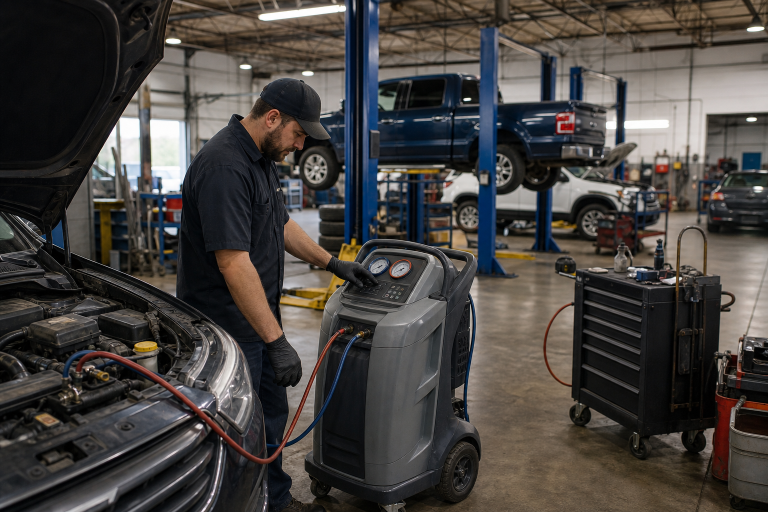
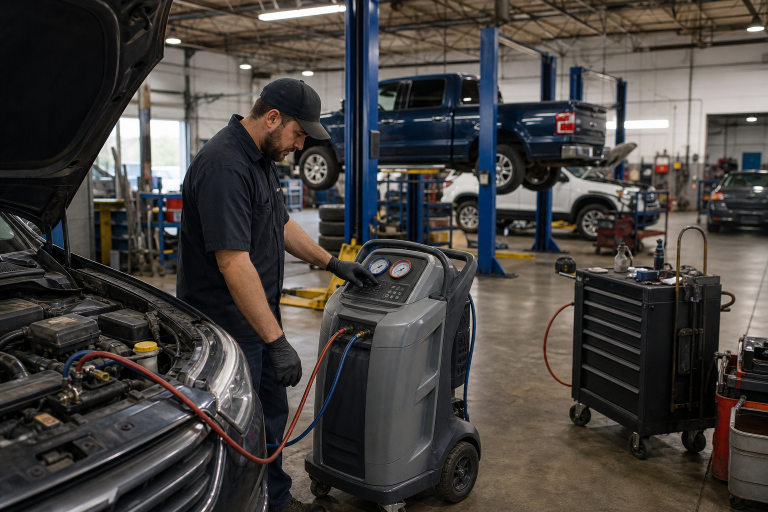
Automotive A/C service machines perform several precise jobs in one unit. They recover refrigerant, evacuate air and moisture, separate oil, identify possible contamination, and recharge a vehicle system to a specified weight. A problem with a hose, valve, vacuum pump, scale, sensor, filter, seal, or control board can affect the entire service cycle. When shop downtime becomes a concern, RobinAir Machine Repair from AC Xpress provides a local option for automotive shops that need equipment-focused support. Based in American Fork, Utah, AC Xpress specializes in mobile diagnostics, repair, preventative maintenance, and parts replacement for RobinAir A/C machines, with service coverage extending up to 150 miles for machine repair. Its focus on on-site equipment service makes it particularly relevant for busy Utah shops trying to avoid shipping delays and lost bay time. Normal wear is not the only cause of failure. Poor storage, skipped maintenance, incorrect oil, damaged couplers, contaminated refrigerant, and a full recovery tank can all produce symptoms that look like a major breakdown. The best response is to diagnose the failed stage in the process rather than assuming the most expensive component has failed.
Early Warning Signs Of Trouble
Small performance changes often appear before the machine stops working altogether. Technicians should make note of longer recovery times, vacuum readings that do not hold, unusual vibration, slow charging, repeated filter warnings, inaccurate charge amounts, oil in an unexpected location, and recurring error codes. A weak vacuum does not automatically mean the vacuum pump is worn out. It may indicate a loose-fitting, leaking hose, a restricted filter, a faulty valve, or a vehicle-side leak. Recording the machine’s readings and operating conditions gives the next technician a much better starting point.
What To Do Before Testing
Before opening panels or ordering parts, document the machine’s brand, model, serial number, refrigerant type, displayed code, and the exact point where the cycle stops. Then move it to a clean, ventilated work area and follow the manufacturer’s shutdown procedure.
- Inspect the power cord, plug, hoses, couplers, tank, and cabinet for visible damage.
- Look for oil residue, refrigerant leaks, moisture, or signs of overheating.
- Check tank capacity and confirm that service valves are in the correct position.
- Review recent service notes for contamination events or prior repairs.
- Keep the machine manual and any error-code reference information available.
Never bypass a safety device to keep a machine operating. An electrical fault, damaged cord, or failed pressure-related safety control can turn a manageable repair into component damage or a serious shop hazard.
A Step-By-Step Diagnostic Process
Confirm The Failed Function
Repeat the issue under controlled conditions. Determine whether failure occurs during refrigerant identification, recovery, vacuum, leak testing, oil injection, or charging. This single observation can reduce unnecessary testing.
Start With Basic Checks
Verify power, tank room, hose condition, coupler engagement, valve position, filters, and fluid levels. Check for pinched hoses and loose fittings. These simple items are often overlooked when technicians move too quickly toward internal repairs.
Evaluate Vacuum Performance
Run a controlled vacuum test and determine whether the machine reaches and holds the expected level. If performance is weak, isolate the hoses and fittings before condemning the pump. A leak in the machine circuit can mimic a vehicle leak, and vice versa.
Verify Refrigerant And Charge Accuracy
Use the approved identification process when contamination is possible, then compare the machine’s charge scale against a known reference. The EPA’s MVAC servicing requirements provide useful background on refrigerant recovery expectations and approved equipment practices.
Common Faults And Likely Causes
- Weak vacuum: Inspect hoses, seals, filters, valves, and pump condition.
- Slow recovery: Check for a full tank, restricted hose, low ambient temperature, or weak recovery components.
- Incorrect charge amount: Test scale accuracy, calibration status, solenoids, and software settings.
- Repeated contamination warnings: Isolate the vehicle, service hose, and machine to identify where the incorrect refrigerant entered the process.
- Electrical errors: Check the cord, outlet, connectors, sensors, fuses, and visible wiring before internal board testing.
Refrigerant Safety And Contamination Control
Contamination control is essential because mixed refrigerants can affect recovery equipment, vehicle performance, and future service work. Label recovery cylinders clearly, use the correct fittings for the refrigerant in use, and avoid connecting equipment until the vehicle label has been confirmed. It is also important to correct leaks instead of repeatedly adding refrigerant. The EPA’s guidance on vehicle A/C recharging explains why diagnosis and leak repair are more durable solutions than repeated top-offs.
A Practical Maintenance Plan
Daily And Monthly Checks
- Inspect hoses, couplers, cords, and fittings for wear or residue.
- Clean dust from vents, controls, and exterior panels.
- Listen for new pump noise or vibration at startup.
- Review vacuum performance, filter condition, and oil condition monthly.
- Compare scale readings with a known weight and review error logs.
Seasonal Preparation
Before summer demand increases, inspect the recovery tank, replace maintenance items on schedule, verify refrigerant settings, and arrange calibration or professional inspection when needed. A short pre-season check is usually less disruptive than an emergency repair during a full appointment schedule.
Repair Or Replace
Repair is often sensible when the machine has available parts, a sound frame, and a history of dependable performance. Replacement may be the better choice when corrosion is severe, components are obsolete, control-board failures recur, or the repair cost approaches the value of a reliable, newer machine. Compare repair cost, downtime, warranty support, expected service life, and refrigerant compatibility before deciding.
When To Call A Specialist
Bring in qualified equipment support when the machine has a recurring error code, a suspected internal leak, a contamination event, a calibration concern, or a major recovery or vacuum failure. Provide the brand, model, serial number, refrigerant type, error code, and a concise symptom history. Clear details help the technician arrive prepared, reduce diagnostic time, and get the machine back into service with confidence.
Conclusion
Reliable automotive A/C machine performance depends on consistent maintenance, accurate diagnostics, and timely repairs. Rather than replacing parts based on guesswork, technicians should identify where the service cycle fails, record symptoms carefully, and work through a logical diagnostic process. Routine inspections of hoses, filters, scales, vacuum performance, and recovery components can prevent many common breakdowns before they interrupt shop operations. Proper refrigerant handling and contamination control also help protect both the equipment and the vehicles being serviced. When recurring error codes, calibration problems, internal leaks, or major component failures occur, professional equipment support is often the most efficient solution. With a preventive maintenance routine and a structured troubleshooting approach, shops can reduce downtime, improve repair accuracy, and keep their A/C service machines operating reliably throughout the busiest seasons.