
Flooring does more than set the visual tone of a home. It is the surface people walk on, work on, and live with every day. A successful plan accounts for the practical demands of each space before narrowing the choices by color, texture, and style.
For homeowners comparing carpet, wood, tile, vinyl, and laminate, floor laminate flooring options from Carpets Plus Design provide a useful starting point. This locally owned St. George, Utah, design center offers flooring categories, product guidance, and installation support for homeowners and businesses throughout Southern Utah, helping customers weigh durability, maintenance, room conditions, and design goals before selecting a surface.
Table of Contents
- 1 Start With Four Practical Questions
- 2 Entryways and Hallways: Prioritize Durability
- 3 Kitchens: Balance Cleanup and Comfort
- 4 Bathrooms and Laundry Rooms: Treat Moisture as the Main Factor
- 5 Living Rooms and Bedrooms: Choose the Feel You Want
- 6 Home Offices and Flex Rooms: Account for Chairs and Acoustics
- 7 Compare Common Flooring Materials
- 8 Create a Connected Look Across Different Rooms
- 9 Build the Budget Around the Whole Project
- 10 Questions to Ask Before Ordering
- 11 Final Checklist for Choosing With Confidence
Start With Four Practical Questions
Before visiting a showroom or requesting an estimate, consider how the room functions on an ordinary day. These questions keep the decision focused on real household needs.
- How much traffic does the room receive? Hallways, entrances, kitchens, and family rooms generally face more repeated foot traffic than bedrooms.
- Will the floor face moisture? Kitchens, bathrooms, laundry rooms, basements, and exterior entries need special attention to spills, humidity, and tracked-in water.
- How much comfort is needed? Think about warmth, softness, sound control, standing time, and whether people commonly go barefoot in the room.
- How much upkeep is realistic? Choose a material whose vacuuming, sweeping, spot-cleaning, sealing, or refinishing needs fit the household routine.
Entryways and Hallways: Prioritize Durability
Entryways collect dirt, grit, moisture, and shoe traffic. Hallways may not get as many spills as kitchens, but their narrow paths concentrate wear in predictable areas. Durable surfaces with finishes or patterns that do not emphasize every scuff can be practical choices. Mats at exterior doors help catch debris before it reaches the flooring, while properly planned transition strips help nearby materials meet cleanly and safely.
Kitchens: Balance Cleanup and Comfort
Kitchens require flooring that can handle food spills, frequent cleaning, chair movement, and occasional dropped utensils. Tile offers a durable, hard surface that suits moisture-prone locations, though it can feel firm underfoot. Luxury vinyl is often selected for its resilient feel and straightforward routine cleaning. Laminate, engineered wood, and hardwood can create a warm, continuous look with adjoining living areas, but each product has its own limits around water exposure.
Waterproof and water-resistant labels are not promises for every situation. Review the manufacturer’s installation instructions, cleaning guidelines, and warranty language, especially regarding seams, edges, standing water, and moisture from below the floor.
Bathrooms and Laundry Rooms: Treat Moisture as the Main Factor
Bathrooms and laundry rooms need flooring that withstands typical humidity and the risk of water on the surface. Ceramic or porcelain tile and appropriate resilient flooring are common options. In a bathroom, a matte or textured surface may offer more traction than a highly polished finish. Wood-based flooring products can have restrictions in wet areas, so confirm that the specific product is approved for the room rather than relying on its appearance alone.
- Ask how the flooring performs if water remains on it briefly.
- Confirm whether the subfloor must be dry, level, or protected by a particular underlayment.
- Plan edge treatments, grout, sealants, and transitions that suit the installation.
- Consider how easily the surface can be cleaned around toilets, appliances, and cabinets.
Living Rooms and Bedrooms: Choose the Feel You Want
Living rooms offer wide flexibility because they are usually less humid than kitchens or bathrooms. Hardwood and engineered wood add natural visual warmth. Laminate and luxury vinyl offer wood-look options with different performance characteristics. Carpet can make a shared space feel softer and can reduce the sound of footsteps and play.
Bedrooms place a higher value on quiet and underfoot comfort. Carpet is a natural fit for many bedrooms, particularly when softness and sound absorption matter. Hard flooring paired with an area rug can also work well for households that prefer a smoother surface for routine cleaning. A helpful guide to choosing flooring for living spaces reinforces the importance of matching material performance to moisture, traffic, comfort, and maintenance needs.
Home Offices and Flex Rooms: Account for Chairs and Acoustics
Home offices may need to support rolling chairs, desk movement, video calls, and long periods of sitting or standing. A smooth, hard surface can make chair movement easier, while a chair mat can protect the floor beneath a work zone. Low-pile carpet can reduce sound and create a quieter setting. Flex rooms should be chosen based on their likely future use, whether that means exercise equipment, guests, hobbies, or children’s activities.
Compare Common Flooring Materials
- Carpet: Well-suited to bedrooms, stairs, and quiet family spaces. Consider stain resistance, pile style, vacuuming needs, and moisture exposure.
- Hardwood: A strong choice for living rooms, dining rooms, offices, and bedrooms. Plan for scratches and dents, and for careful moisture management.
- Engineered wood: Provides a wood appearance in many living spaces. Check the product’s installation limits, wear layer, and subfloor requirements.
- Laminate: Offers decorative layers that can resemble wood or stone, usually with simple daily care. Protect edges and seams from moisture when required by the product.
- Luxury vinyl: Useful in busy rooms, kitchens, entries, and many laundry spaces. A smooth, properly prepared subfloor is important for the finished appearance.
- Tile: Fits bathrooms, kitchens, and entrances where a hard, easy-to-clean surface is useful. It can feel cold or firm, and grout requires periodic attention.
Create a Connected Look Across Different Rooms
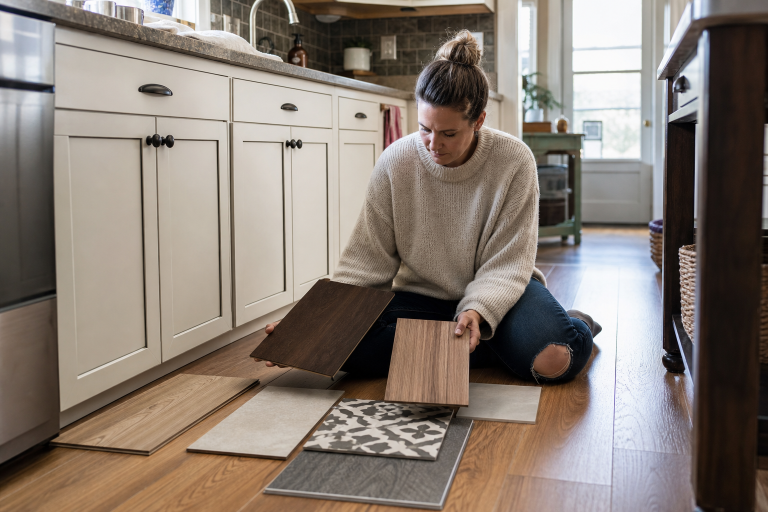
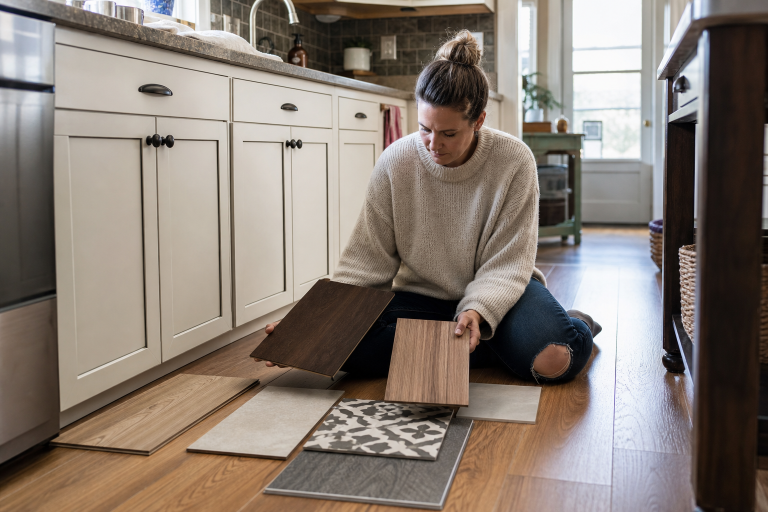
A cohesive home does not require identical flooring from wall to wall. Keep adjoining materials within a similar warm, cool, light, or dark color family. Repeat trim colors or hardware finishes, and choose transition pieces that look intentional. Large samples viewed in the actual room are especially valuable because daylight and interior lighting can alter how color and texture appear.
Build the Budget Around the Whole Project
The material price is only one part of a flooring budget. Measure rooms carefully, then ask for an itemized estimate that addresses removal of existing flooring, waste for cuts, subfloor repairs, underlayment, trim, delivery, installation, and furniture moving. Leave room in the budget for unexpected subfloor corrections, particularly in older homes or spaces with prior water exposure.
Questions to Ask Before Ordering
- Is this specific product approved for this room’s moisture level?
- What subfloor preparation and underlayment does it require?
- Does the material need time to acclimate before installation?
- Which cleaning products are safe for the finish?
- Can individual damaged planks, tiles, or sections be replaced?
- What does the installation quote include, and how will transitions be handled?
Final Checklist for Choosing With Confidence
Choose flooring with room use, daily maintenance, comfort, and installation conditions in mind. Confirm traffic and moisture demands, view samples under your home’s lighting, account for subfloor and transition costs, and read the warranty before placing an order. A room-by-room approach helps create a home that feels visually connected while giving every space the flooring it genuinely needs.