
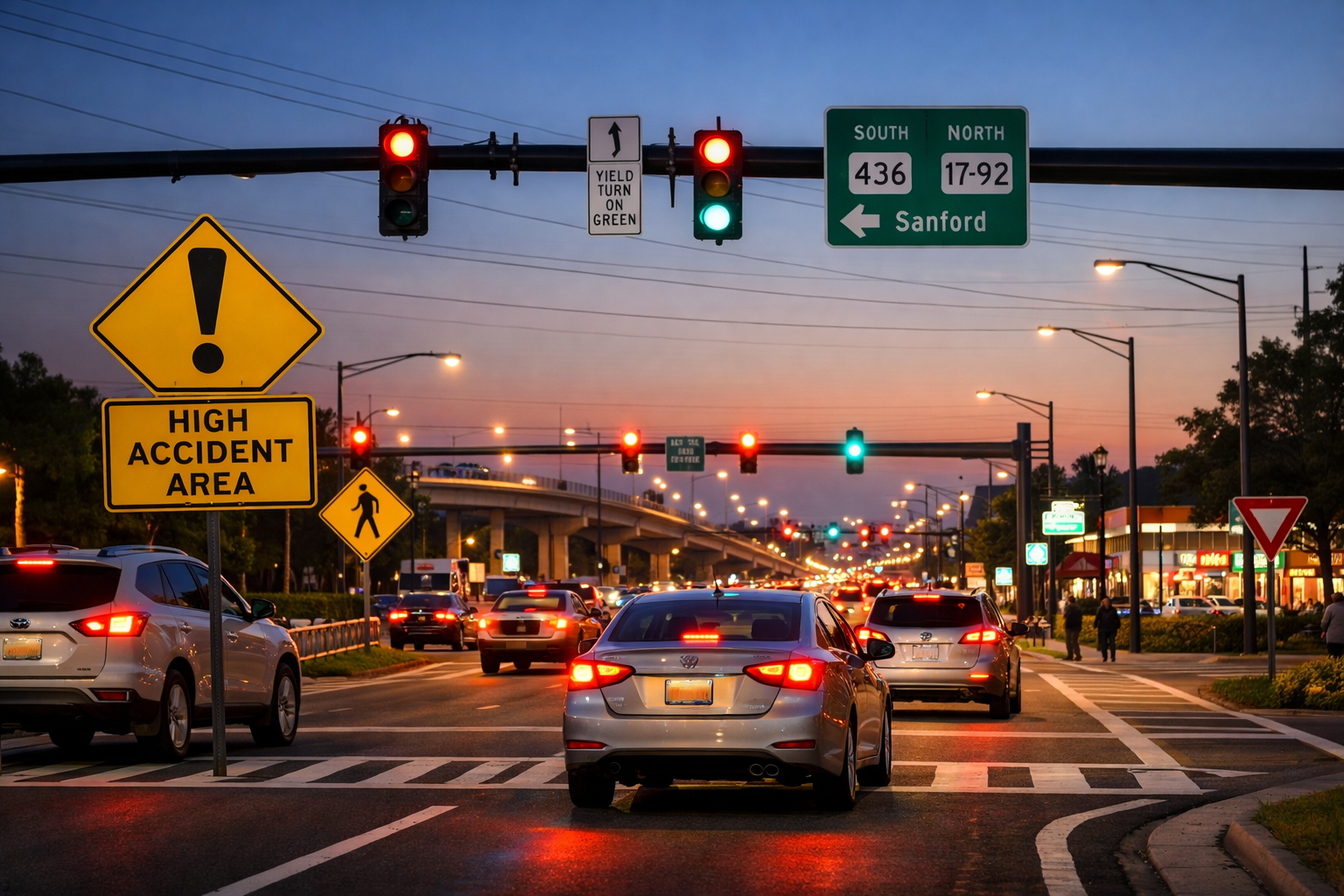
Understanding the most hazardous intersections in Casselberry, Florida, is essential to enhancing road safety and reducing accident risk. By identifying these high-risk areas, drivers and pedestrians can exercise increased caution, and local authorities can implement targeted improvements to mitigate dangers. For those affected by accidents in these areas, consulting a Casselberry car accident lawyer can guide legal options.
Table of Contents
- 1 Howell Branch Road and Lake Howell Road
- 2 Winter Park Drive and Wilshire Drive
- 3 Winter Park Drive and Hibiscus Road
- 4 Oxford Road and Sunset Drive
- 5 State Road 436 and Red Bug Lake Road
- 6 State Road 436 and U.S. Highway 17-92
- 7 Safety Measures and Improvements
- 8 Common Causes of Intersection Accidents
- 9 What to Do After an Accident
- 10 Community Involvement in Road Safety
- 11 Conclusion
Howell Branch Road and Lake Howell Road
This intersection has been identified as one of the most dangerous in Casselberry. According to the Seminole County Vision Zero Action Plan, it ranks seventh among the top intersections with the highest number of severe injuries and fatalities. The plan reports a total of three serious injuries at this location, including one involving a pedestrian and two involving vehicles. Factors contributing to the high risk include heavy traffic flow and limited visibility.
Winter Park Drive and Wilshire Drive
Another high-risk intersection is Winter Park Drive and Wilshire Drive. The City of Casselberry’s Vision Zero Action Plan lists this intersection as the fifth-highest hazard, with a safety score of 96. The area’s design and traffic patterns may contribute to the elevated risk of collisions.
Winter Park Drive and Hibiscus Road
Winter Park Drive and Hibiscus Road are also noted for their danger. It ranks sixth in the city’s list of high-risk intersections, with a safety score of 75. The intersection’s layout and traffic volume are likely factors in its inclusion on this list.
Oxford Road and Sunset Drive
The intersection of Oxford Road and Sunset Drive is ranked fourth-most dangerous in Casselberry, with a safety score of 97. The combination of residential and through traffic may contribute to the higher accident rate at this location.
State Road 436 and Red Bug Lake Road
State Road 436 (Semoran Boulevard) and Red Bug Lake Road are a major intersection in Casselberry that has experienced significant traffic issues. In 2014, a flyover ramp was constructed to alleviate congestion and improve safety. Despite these improvements, the area remains a focal point for traffic management efforts.
State Road 436 and U.S. Highway 17-92
The intersection of State Road 436 and U.S. Highway 17-92 has been historically problematic. Recognized as one of the deadliest intersections in the nation, it averaged three traffic accidents per day. In 2015, a flyover interchange was completed to reduce congestion and enhance safety. Ongoing monitoring and improvements continue to address safety concerns in this area.
Safety Measures and Improvements
To address the dangers at these intersections, Casselberry and Seminole County have implemented several safety measures. Notably, a $17.2 million federal grant was awarded to Casselberry for safety improvements along a four-mile segment of State Road 436. Planned enhancements include new pedestrian signals, improved lighting at crosswalks, decorative fencing along medians to prevent unsafe crossings, widened sidewalks, and adjustments to traffic signal timing to discourage speeding. These initiatives aim to reduce accidents and save lives along this critical corridor. By staying informed about high-risk intersections and adhering to traffic laws, drivers and pedestrians can help create a safer environment in Casselberry. Ongoing efforts by local authorities to implement safety improvements are crucial to mitigating the risks at these intersections.
Common Causes of Intersection Accidents
Many factors can contribute to intersection accidents in Casselberry. Among the most common causes are distracted driving, such as texting or using a mobile device while driving, and failing to yield the right of way. Speeding, aggressive driving, and impaired driving (due to alcohol or drugs) also play significant roles in the frequency of collisions. Additionally, poor weather, confusing signage, and visibility-obstructing obstructions can further increase the dangers at these critical intersections. Understanding these causes helps drivers take meaningful precautions, such as approaching intersections at safe speeds and paying heightened attention to their surroundings.
What to Do After an Accident
If you are involved in an accident at one of these or any intersection in Casselberry, your priority should be safety. Move your vehicle out of traffic if it is safe to do so and check for injuries. Call 911 to request medical assistance if needed and notify the authorities to file an official accident report. Gather evidence by taking photos of the scene, vehicle damage, and any relevant road conditions or signage. Exchange contact and insurance information with the other parties involved.
Community Involvement in Road Safety
Improving the safety of Casselberry’s roads is a community effort. Residents can participate by reporting dangerous intersections, malfunctioning traffic signals, or damaged signage to the city or county transportation department. Community groups often collaborate with local governments to advocate for additional safety measures, such as enhanced crosswalks, bicycle lanes, and traffic-calming measures. Public awareness campaigns that educate drivers, pedestrians, and cyclists about road safety are also vital. Neighborhood associations and schools can sponsor safety workshops, distribute traffic rules literature, and emphasize vigilance at high-risk intersections. By working together, the Casselberry community can help create a safer environment for everyone on the road.
Conclusion
Understanding Casselberry’s most hazardous intersections is crucial for both drivers and pedestrians to reduce accidents and enhance overall safety. Local authorities have implemented significant measures, including improved signals, pedestrian protection, and infrastructure upgrades, to mitigate risks in high-traffic areas such as State Road 436 and U.S. Highway 17-92. Awareness of common accident causes, careful driving, adherence to traffic laws, and active community involvement can further prevent collisions. By staying informed and proactive, residents and visitors alike can contribute to safer roads and help Casselberry continue improving traffic safety for everyone.