
Maintaining a safe and functional electrical system in your home is a critical responsibility. Ignoring an outdated or faulty panel can introduce hazards you want to avoid, including electrical fires and widespread power issues. Recognizing when it is time for an electrical panel replacement is one of the best ways to protect your home and family from preventable dangers.
As power demand grows with the increasing number of modern devices and appliances, so does the need for an electrical system that can handle these loads efficiently. Faulty or old panels are not just a nuisance; they represent a legitimate safety risk that requires immediate attention. Understanding the warning signs can help you take prompt action before significant damage occurs or someone gets hurt.
Electrical panels that are not maintained or updated may fail suddenly, causing more than just inconvenience. Failing to spot the warning signs could leave you at risk for property damage or even personal injury. Homeowners should remain aware of the most common indications of panel problems, which can range from electrical irregularities to obvious physical damage.
According to the National Fire Protection Association, electrical failures or malfunctions were the second leading cause of U.S. home fires between 2015 and 2019. Regular inspections and timely upgrades help reduce these risks.
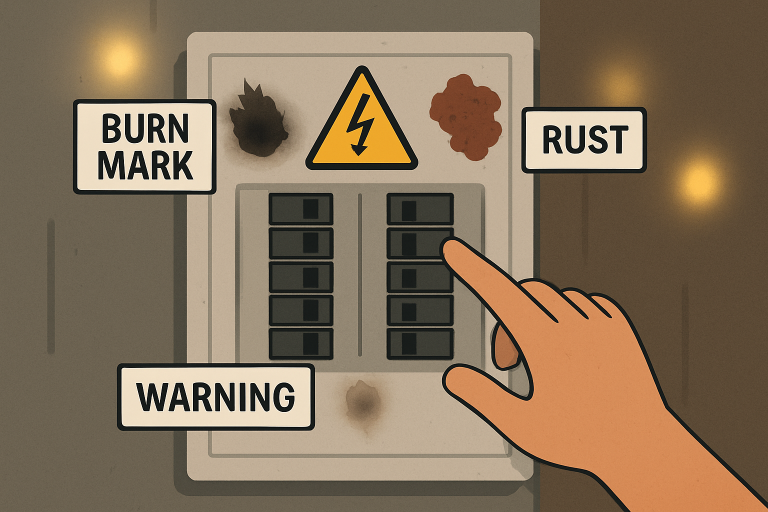
Table of Contents
Frequent Circuit Breaker Trips
When your circuit breakers trip often, it is likely a sign that your electrical panel cannot handle the current load. This is often the result of either an aged system or a panel that was not designed to support the energy demands of modern households. Breakers that trip should never be ignored, as this is the panel’s way of preventing overheating or electrical faults. If the issue continues after confirming there are no faulty appliances, the panel itself may need to be replaced for continued safety.
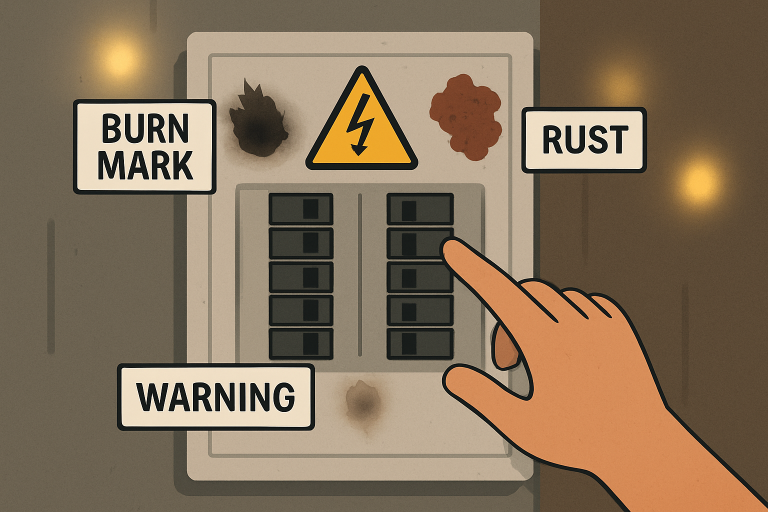
Visible Damage: Rust, Corrosion, and Burn Marks
You should regularly inspect your electrical panel for any visible signs of trouble, including rust, water damage, corrosion, or burn marks. These problems often result from moisture intrusion, internal overheating, or improper electrical connections. Even seemingly minor surface damage can escalate into more significant risks if left unaddressed. Having a licensed electrician assess any visible damage is the best way to determine whether your panel needs immediate replacement.
Flickering or Dimming Lights
If you frequently notice your lights flicker or dim, especially when large appliances like air conditioners, microwaves, or vacuums are in use, this can indicate that your panel is struggling to deliver consistent power. This issue may not be isolated to a single fixture or room. Often, it points to the circuit panel itself as the root cause. Upgrading the panel can help evenly distribute power throughout your home and eliminate disruptions.
Unusual Noises from the Panel
Hearing unusual buzzing, static, hissing, or crackling noises coming from your electrical panel is never normal. These sounds may be caused by loose wires, defective breakers, or internal arcing, all of which can lead to electrical fires. Such noises should be treated as urgent warnings. In most cases, a licensed electrician should investigate immediately to determine if replacement is needed. Taking quick action can prevent much more dangerous situations.
Age of the Electrical Panel
Most electrical panels have a typical lifespan of 25 to 40 years. If your panel is approaching, within, or past this range, it may not conform to current electrical codes or standards. Older panels may lack safety features now required by modern regulations and can be more susceptible to faults. Routine inspections, along with awareness of your system’s installation date, play an important role in home safety and efficiency. More information on the risks associated with outdated panels can be found at the Angi: Does Your Electrical System Need Updating?.
Burning Smell or Scorch Marks
Any burning smell or visible scorch marks around or inside your electrical panel should be considered a serious alarm. These symptoms are often caused by overheating, melting insulation, or arcing between wires or connectors inside the panel. The risks stemming from these warning signs include fire and the possible spread of electrical damage throughout your home. If you experience these symptoms, disconnect the power if possible and contact an electrician immediately. Never ignore odors or scorch marks, as the consequences can be severe.
Insufficient Capacity for Modern Appliances
Modern homes typically use a wide array of power-hungry appliances and devices, from kitchen gadgets and entertainment tech to heating and air conditioning units. If your current panel is not equipped to provide an adequate power supply for these needs, you will likely notice frequent breaker trips, power sags, or damaged devices. Upgrading the panel to accommodate current and future needs is often the safest way to ensure reliable, safe electrical access throughout your home.
Conclusion
Understanding the warning signs that your electrical panel needs to be replaced is essential to safeguarding your property and loved ones. Homeowners who notice frequent power issues, visible damage, or troubling sounds or smells should contact a licensed electrician for a professional assessment. Proactive replacement and maintenance allow you to meet current electrical demands safely while protecting your investment and your family’s well-being.