
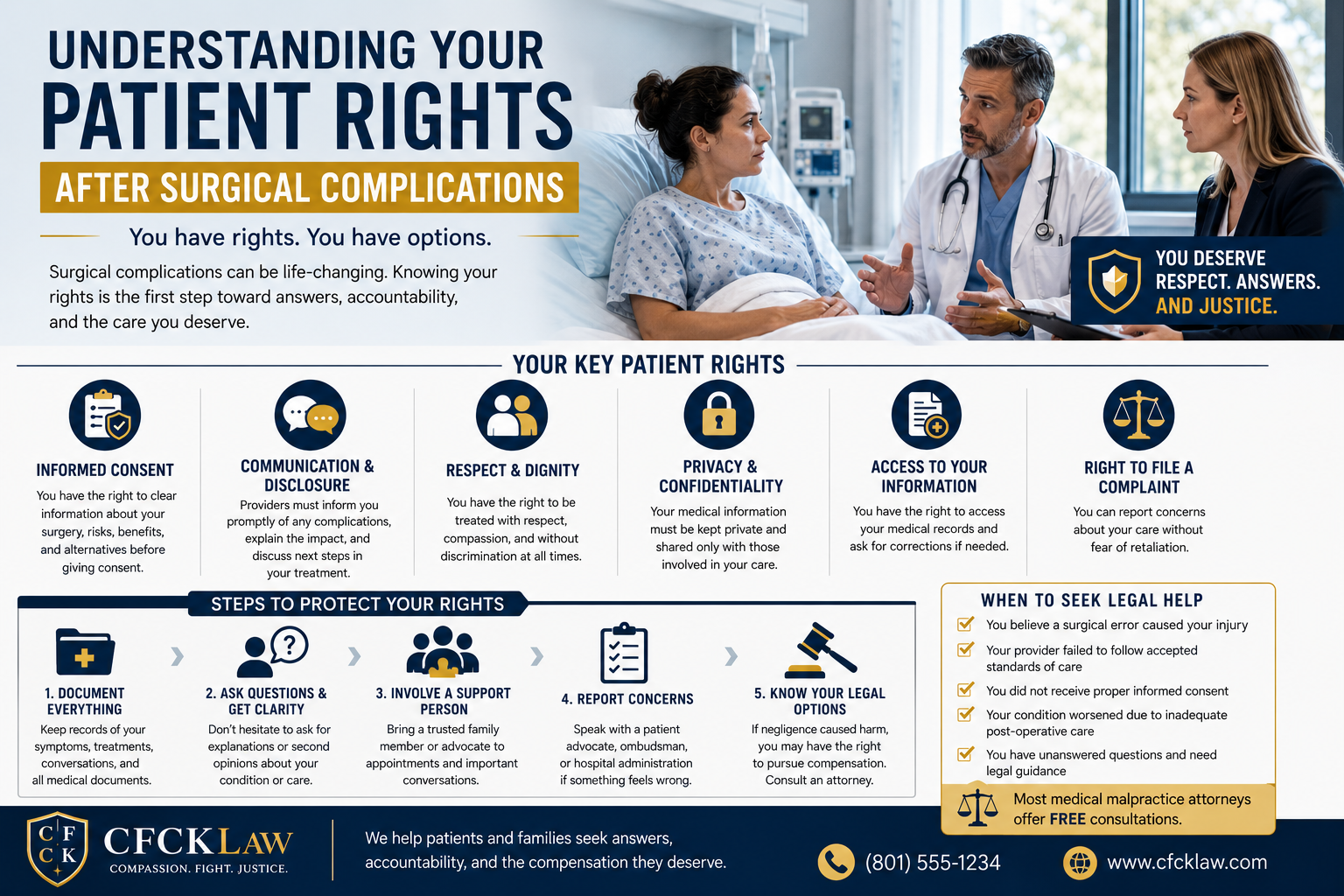
Facing surgical complications can be an emotional and physical ordeal, often leaving patients and their families uncertain about the next steps and their legal protections. Understanding patient rights after a medical procedure goes awry is essential to ensuring fair treatment and access to justice. You do not have to navigate this situation alone. Legal resources like CFCKLaw offer guidance for individuals coping with surgical difficulties to explore their options and protect their well-being.
Complications after surgery can occur for various reasons, including unexpected medical issues, surgical error, or inadequate post-operative care. When complications arise, knowing your rights as a patient is the first step in seeking answers, accountability, and appropriate compensation.
Table of Contents
Understanding Patient Rights After Surgery
Every patient who undergoes surgery in the United States is protected by a set of fundamental rights. These core principles apply to care before, during, and after a medical procedure. Key rights include receiving care that meets established standards, being treated respectfully and without discrimination, maintaining privacy, and being informed about your care plan and any risks involved. This foundation is the basis for trust between patients and healthcare providers and is critical in situations involving complications.
Your Right to Informed Consent
One of the most important rights is informed consent. This means your healthcare provider must explain the nature of your surgery, its benefits, potential risks, and alternatives in a way you can understand. If complications arise, the provider should discuss what happened and the impact on your recovery. If you did not receive comprehensive information or your questions were dismissed prior to the procedure, this can be a substantial issue in any legal review of your case. Patients must be allowed to weigh the benefits and risks before agreeing to any intervention. Further reading from the Mayo Clinic explains broader patient rights in clinical settings.
Communication and Disclosure of Complications
Open and honest communication is essential when a surgical complication occurs. Medical professionals are obligated to promptly inform you (or your appointed representative) about any issue that affects your treatment or expected recovery. This includes clear explanations of any additional procedures that may be necessary and of any changes to your ongoing care. If you feel communication has been lacking or confusing, consider speaking with the hospital’s patient advocate or ombudsman.
Advocating for Your Care and Seeking Support
Patients have the right to involve a support person, such as a family member or patient advocate, when discussing treatment choices or complications. Effective advocacy involves asking follow-up questions, requesting second opinions when necessary, and ensuring your concerns are documented in your medical record. Hospitals and clinics often have social workers or case managers trained to assist patients through these processes and ensure their rights are respected.
Legal Recognition of Medical Negligence
Not all surgical complications are the result of negligence. Complications can develop even when standards of care are met. However, you may have the right to pursue legal remedies if harm results from errors such as improper surgical technique, inadequate sterilization, or a failure to recognize and respond to post-operative problems. Laws vary by state, but negligent care generally means a provider acted outside accepted medical standards and caused preventable harm that would not have occurred otherwise. Consulting with a lawyer experienced in medical malpractice can help you determine if your case meets these criteria.
Documenting Your Surgical Complications
Careful documentation is essential after experiencing unexpected outcomes. Patients and their families should gather all relevant medical records, surgical reports, discharge instructions, correspondence with providers, and a timeline of symptoms or changes in condition. Photographs of visible injuries or complications can also be helpful. These records provide crucial evidence should you choose to file a complaint or pursue legal action regarding your care.
When to Seek Legal Help
If you believe your rights were violated or that medical errors caused harm, seeking legal advice is recommended. Most medical malpractice attorneys offer free consultations, allowing you to discuss your case without immediate financial commitment. A knowledgeable attorney can help you evaluate your situation, understand the applicable deadlines for legal action, and advocate for your best interests throughout the process.
Conclusion
Surgical complications can have lasting effects on your health and well-being. Knowing your patient rights is critical to ensuring you receive fair and respectful care. If you are unsure how to proceed or if you believe your complications were preventable, do not hesitate to seek legal counsel and use available resources to protect your interests and regain control over your recovery.