
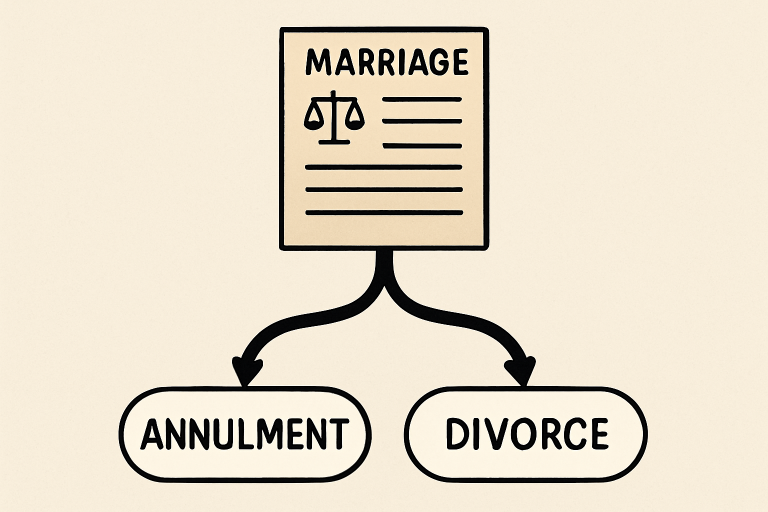
When facing the complexities of ending a marriage, understanding your options is crucial. Many people are uncertain about whether they should pursue an annulment or a divorce, and the differences between these forms of marital dissolution are often misunderstood. Both processes result in a legal end to a marital relationship; however, the nature of the termination and the requirements for each are distinct. If you are evaluating your options, speaking with a divorce attorney Red Bank, NJ can help clarify your rights and the best approach given your circumstances.
An annulment is not simply an “easy” or “quick” alternative to divorce. Each route has specific legal procedures and consequences. Choosing the right path is often about understanding which process suits your situation and the future implications of your choice—including how it may affect finances, property, and children.
This article examines the legal definitions, grounds, procedures, and implications of annulments and divorces, debunking common myths and providing resources for further support. Recognizing these differences ensures you make informed decisions and understand your legal standing moving forward.
Whether you are seeking a clean break or addressing complicated matters such as child custody or asset division, clarity on this topic is essential. For those seeking further information, the American Bar Association provides detailed guidance on the dissolution of marriage processes.
Table of Contents
Definitions: Annulment vs. Divorce
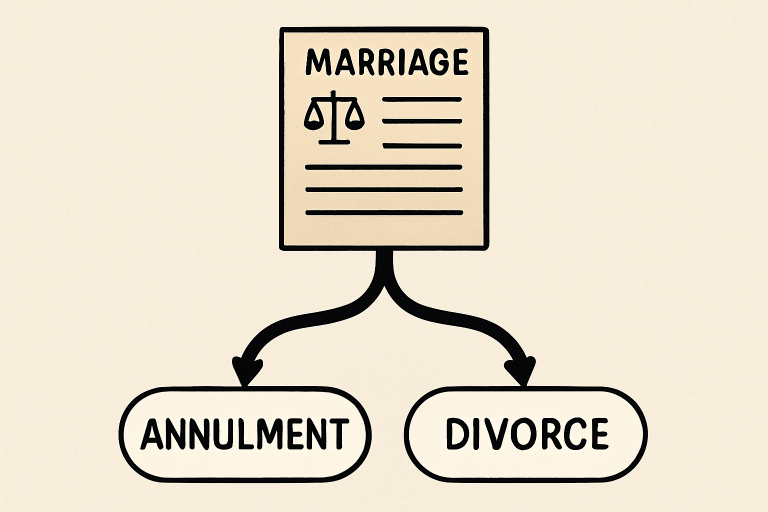
An annulment occurs when a court declares that a marriage was never legally valid, treating it as though it never existed. In contrast, a divorce ends a legally recognized marriage, acknowledging that a valid union took place but is now dissolved. This distinction has significant implications for both parties, impacting their legal status, property rights, and future remarriage options.
Legal Grounds for Annulment
Annulments are only available in limited situations where a marriage is deemed void or voidable. Common grounds for annulment include:
- Fraud or Misrepresentation: One party deceived the other about critical facts, such as identity, previous marital status, or the intention to have children.
- Bigamy: One spouse was already legally married at the time of the new marriage.
- Incapacity or Coercion: If one or both parties lacked mental capacity to consent, or if the marriage was entered into under force or duress, annulment may be granted.
- Underage Marriage: Marriages involving minors without legal consent can be annulled in most states.
Proving these grounds in court often requires extensive evidence, making annulments less common and more procedurally challenging than divorces.
Procedural Differences
Annulment procedures require the petitioner to file legal documents and provide reasoning and evidence to establish that the marriage is void or voidable, which may involve court testimony, documentation, and witness statements. The process can be lengthy, often exceeding one year, as it requires proving disputed facts. In contrast, divorce procedures focus on terminating a valid marriage and can be categorized as “no-fault” (e.g., irreconcilable differences) or “fault-based” (e.g., adultery). Divorce involves several steps, including property division, determination of spousal support, and child custody arrangements. While many divorces are contentious, they can also be settled through mediation or collaborative law methods.
Impact on Property Division and Spousal Support
The approach to dividing property and assigning spousal support depends primarily on whether a marriage is ended by annulment or divorce:
- Annulment: With the marriage treated as if it never occurred, courts generally aim to return both individuals to their pre-marriage status. While there may not be the same statutory guidelines for dividing marital property as in a divorce, courts will ensure fairness by addressing significant contributions or joint acquisitions during the purported marriage.
- Divorce: In divorce, most states use either equitable distribution or community property rules to divide marital assets. Spousal support (alimony) may be awarded based on factors like the length of marriage, financial need, and earning capacity.
Child Custody and Legitimacy
Annulment does not affect the legitimacy of children born during the union; children remain legitimate, with both parents retaining rights and obligations regarding custody and support. Divorce proceedings similarly establish child custody, visitation, and support, aiming to prioritize the child’s best interests regardless of how the marriage ends.
Common Misconceptions
Misinformation about annulments is widespread. Some prevalent myths include:
- Annulments are easier to get than divorces: On the contrary, proving grounds for an annulment is typically more challenging and fact-specific than filing for a no-fault divorce.
- Annulments erase all marriage records: An annulment alters the legal status of a marriage but does not eliminate documentation; legal records and previous court filings remain in effect.
- Children from annulled marriages are illegitimate: Children remain legitimate, and both parents have the same legal responsibilities as they would in a divorce.
Conclusion
Choosing between annulment and divorce involves understanding not only the circumstances of your marriage but also the legal and practical consequences of each option. Annulments are appropriate in specific cases where the marriage was never valid under the law, while divorce is the process for dissolving legally recognized unions. Each route affects roles, responsibilities, and rights related to property, support, and children. Seeking guidance from a qualified family law professional is the best way to ensure that your interests are protected and your path forward is clear.