Missing teeth can affect more than the appearance of a smile. Depending on where the gap is located, tooth loss may change the way a person chews, speaks, or distributes pressure across the remaining teeth. The decision to replace a tooth is personal, but it should be based on a complete understanding of the available options. Even a tooth that is not visible when smiling can have an important role in keeping the bite balanced and making daily eating more comfortable.
Some patients need conventional treatment, while others may be exploring no bone implant solutions when reduced jawbone volume is part of the conversation. A qualified dental professional can assess whether a proposed option fits the patient’s health, anatomy, and long-term goals. That assessment should also account for existing restorations, clenching or grinding habits, and the condition of the teeth that would remain after treatment.
Why Replacing Missing Teeth Matters
A missing tooth does not always cause immediate pain, so it can be easy to delay treatment. Over time, however, adjacent teeth may drift toward an open space, and bite forces can change. A missing back tooth, for example, may cause someone to chew more often on the other side of the mouth. In some cases, the opposing tooth may begin to move out of its usual position because it no longer meets a tooth below or above it during biting.
Bone in the jaw is normally stimulated by tooth roots during daily chewing. When a tooth is lost, the bone in that area may gradually shrink. The effects of tooth loss can include bone loss, shifting teeth, and changes in speech, which is why an evaluation is worthwhile even when the gap does not seem urgent. Replacing teeth can also help support facial appearance and make it easier to maintain a functional bite, although the expected result varies based on the person and the treatment selected.
The Main Tooth-Replacement Options
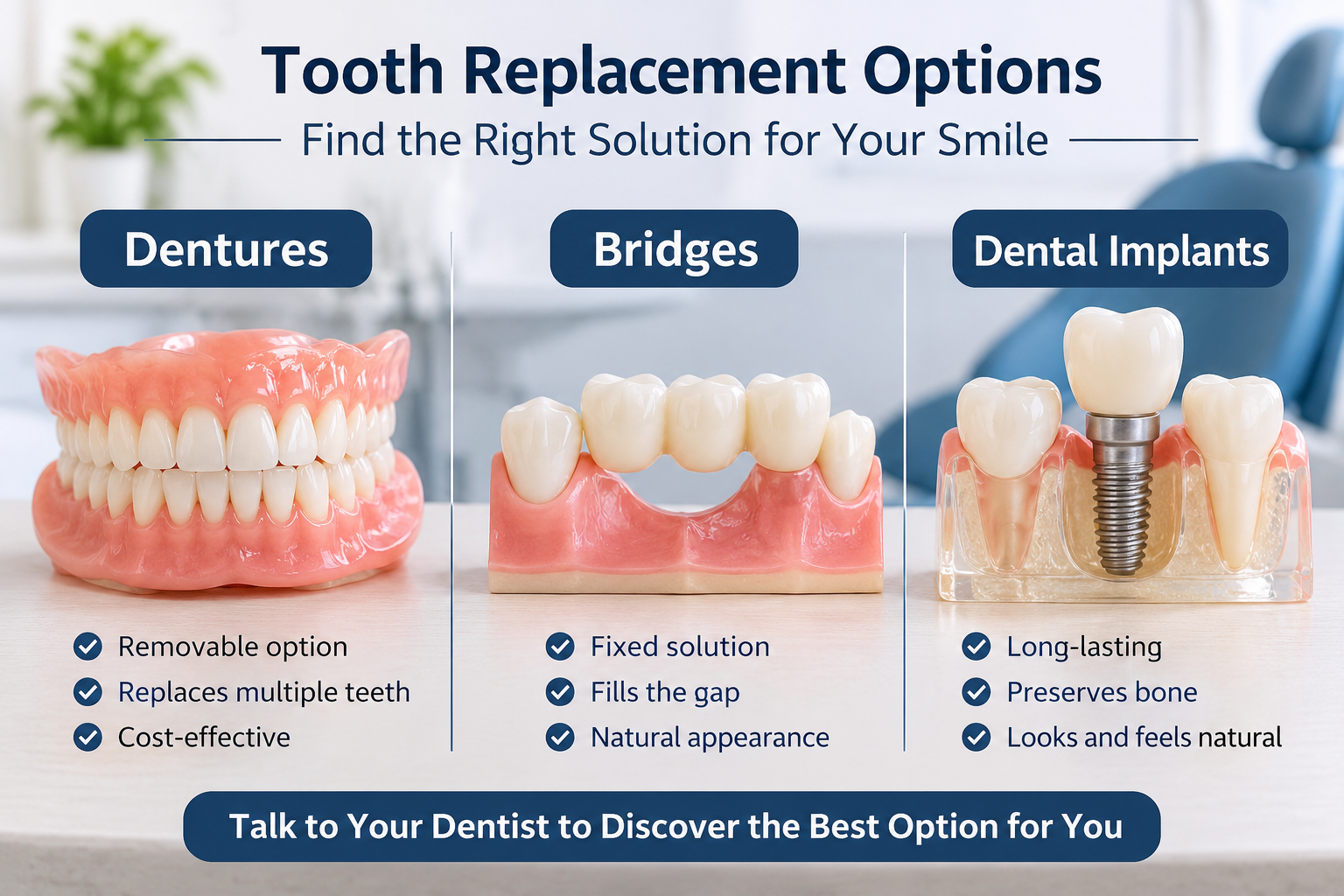
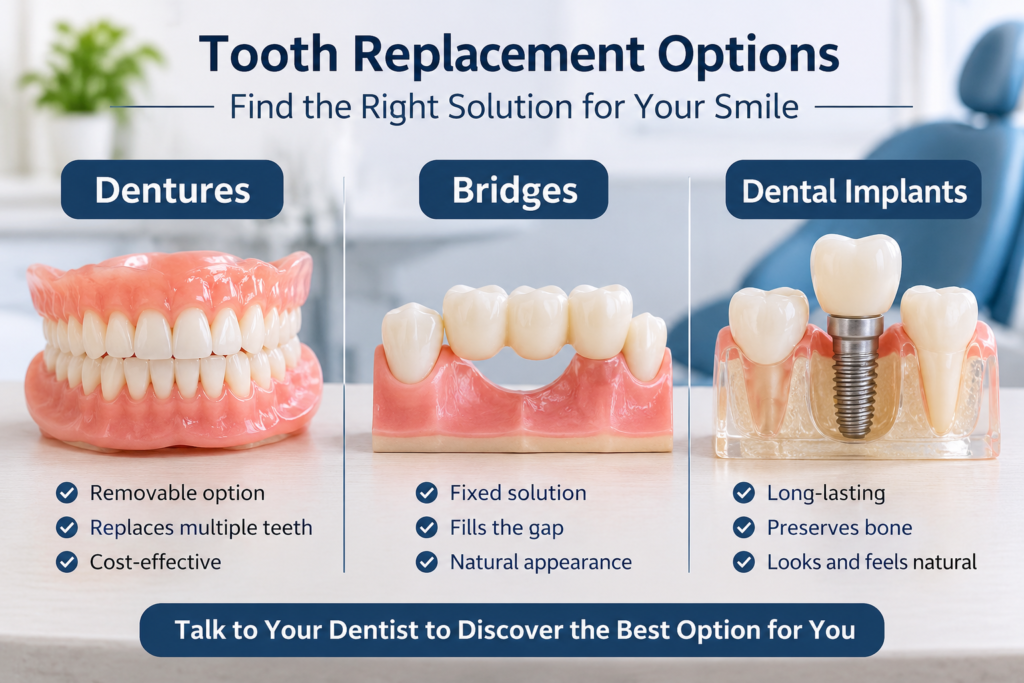
There is no single best treatment for every person. The three main options are dentures, bridges, and dental implants, each of which can be appropriate in the right setting. In many treatment plans, these options are not mutually exclusive: for example, implants may be used to stabilize a removable denture or to support a fixed bridge.
- Dentures: Removable appliances that can replace several teeth or an entire upper or lower arch.
- Bridges: Fixed restorations that span a gap using nearby teeth or implants for support.
- Dental implants: Posts placed in the jawbone that can support a crown, bridge, or denture.
How Dentures Work
Types Of Dentures
Partial dentures replace several missing teeth while fitting around remaining natural teeth. Complete dentures replace all teeth in an arch. Immediate dentures may be placed soon after extractions, while implant-supported dentures connect to implants for additional retention. The materials, clasp design, and support system can vary, so two partial dentures may look and feel quite different from one another.
Benefits And Limitations
Dentures can be a practical option for replacing many teeth and often have a lower initial cost than implant treatment. They are generally removable for cleaning, but the fit may change as gum tissue and jaw contours change. Regular adjustments, relines, and dental reviews may be needed to maintain comfort and function. New denture wearers may also need time to adapt to speaking, chewing, and the sensation of wearing an appliance, particularly with a lower complete denture.
How Dental Bridges Work
A bridge fills the space left by one or more missing teeth. A traditional bridge usually uses crowns placed over teeth beside the gap. An implant-supported bridge uses implants instead of natural teeth for support. The artificial tooth or teeth between the supporting units are often called pontics, and they are designed to restore the appearance and function of the missing area.
When A Bridge May Be Considered
- One or several teeth are missing in the same area.
- Nearby teeth can support a traditional bridge.
- A patient wants a fixed restoration but does not want implant surgery.
- A shorter treatment process is a priority when clinically appropriate.
Traditional bridges require careful cleaning beneath the replacement tooth. They may also require the reshaping of supporting teeth. The health of those teeth, the condition of the gums, and the bite all affect whether a bridge is a sensible long-term choice. A dentist may recommend special floss, floss threaders, or interdental cleaning tools to help remove plaque from the areas beneath and around the bridge.
How Dental Implants Work
Dental implants are surgically placed in the jawbone and serve as anchors for replacement teeth. The dental implant process commonly includes placement of the implant, a healing period during which bone integrates with it, and attachment of a crown, bridge, or denture. In some cases, the timing of extraction, implant placement, and final restoration may differ depending on infection, bone quality, bite forces, and the need for temporary teeth.
Potential Advantages
- Implants can support one replacement tooth, multiple teeth, or a full-arch restoration.
- A single implant may replace a tooth without reshaping healthy neighboring teeth.
- Implants provide a root-like foundation within the jawbone.
- They can improve stability for certain dentures.
Points To Weigh
Implant treatment involves surgery and healing. Some patients need gum treatment, bone grafting, or other care before placement. Tobacco use, untreated gum disease, and certain health conditions may affect healing, so candidacy must be evaluated individually. Implants also require consistent brushing, cleaning between teeth, and professional follow-up. Although the implant itself does not develop a cavity, the surrounding gum and bone tissue can still develop inflammatory problems if plaque control and regular maintenance are neglected.
Dentures, Bridges, And Implants Compared
- For replacing many teeth: Full or partial dentures may be considered, while implants can support a bridge or denture when appropriate.
- For a smaller gap: A traditional bridge or one or more implants may be options.
- For removability: Conventional dentures are usually removable. Bridges are generally fixed. Implant-supported dentures may be fixed or removable depending on the design.
- For nearby teeth: Traditional bridges rely on adjacent teeth, while implants can stand independently.
- For maintenance: Dentures require removal and cleaning. Bridges require cleaning around and beneath the restoration. Implants need daily home care and routine dental visits.
This comparison is a starting point, not a treatment recommendation. Oral health findings matter more than a simple checklist. The longevity of any option also depends on fit, bite force, daily hygiene, routine professional care, and the avoidance of habits that can damage teeth or restorations.
Factors That Shape The Right Choice
Number And Location Of Missing Teeth
One missing front tooth creates different cosmetic and functional concerns than a full arch of missing teeth. A single implant, a short bridge, a partial denture, or an implant-supported full-arch restoration may be considered, depending on the situation. The location of the gap also affects visibility, chewing demands, available space, and the amount of support a restoration will need.
Gum And Jawbone Health
Healthy gums and adequate support are important for long-term restorative care. Dental imaging helps evaluate bone, roots, and surrounding structures. If gum disease or infection is present, it may need treatment before a final restoration is placed. A clinician may also review how the upper and lower teeth meet, because an unstable bite can place excess stress on a new restoration.
Budget, Timeline, And Lifestyle
Compare total expected costs, not only the initial fee. Ask whether the estimate includes imaging, temporary teeth, surgery, restorations, follow-up visits, repairs, relines, or replacement parts. Bridges and dentures may be completed sooner in some cases, while implants often require a healing period. Comfort with removable teeth, preferred foods, cleaning routines, travel, and dental anxiety should also be discussed. It can be helpful to ask what future maintenance is likely to be needed and how quickly repairs can be arranged if a denture, bridge, crown, or attachment needs attention.
Questions To Ask Before Treatment
- Can the natural tooth be saved?
- Which replacement options fit my oral health and goals?
- How would each option affect nearby teeth and jawbone support?
- What steps, visits, and recovery periods are involved?
- What home care will the restoration require?
- Which costs are included now, and which may occur later?
- Would a second opinion be useful?
Bring a current medication list, relevant medical history, any available previous dental X-rays, and insurance information to the consultation. These details can help the dental team plan safely and provide clearer cost information. Patients may also find it useful to describe specific priorities, such as avoiding removable appliances, restoring a visible front tooth quickly, or improving confidence when eating in public.
Common Questions About Tooth Replacement
Is The Most Expensive Option Always The Best?
No. The best option is the one that fits the patient’s clinical needs, health history, preferences, ability to maintain, and financial plan.
Can Someone Get Implants After Wearing Dentures?
Some denture wearers may qualify for implant-supported treatment. Bone levels, gum health, medical conditions, and treatment goals must be assessed first. Existing dentures can sometimes be evaluated as part of the planning process, although a new denture or restoration may be needed for the final result.
Does Age Prevent Someone From Getting Implants?
Age alone does not determine candidacy. Overall health, healing ability, gum condition, available bone, and commitment to daily care are more meaningful factors.
Making A Confident Decision
Dentures, bridges, and dental implants can all restore missing teeth when used in the right circumstances. Compare comfort, oral health needs, treatment time, maintenance, and total cost before deciding. A complete dental evaluation and a clear discussion of alternatives provide the strongest foundation for a confident choice.